
Last updated November 2, 2026
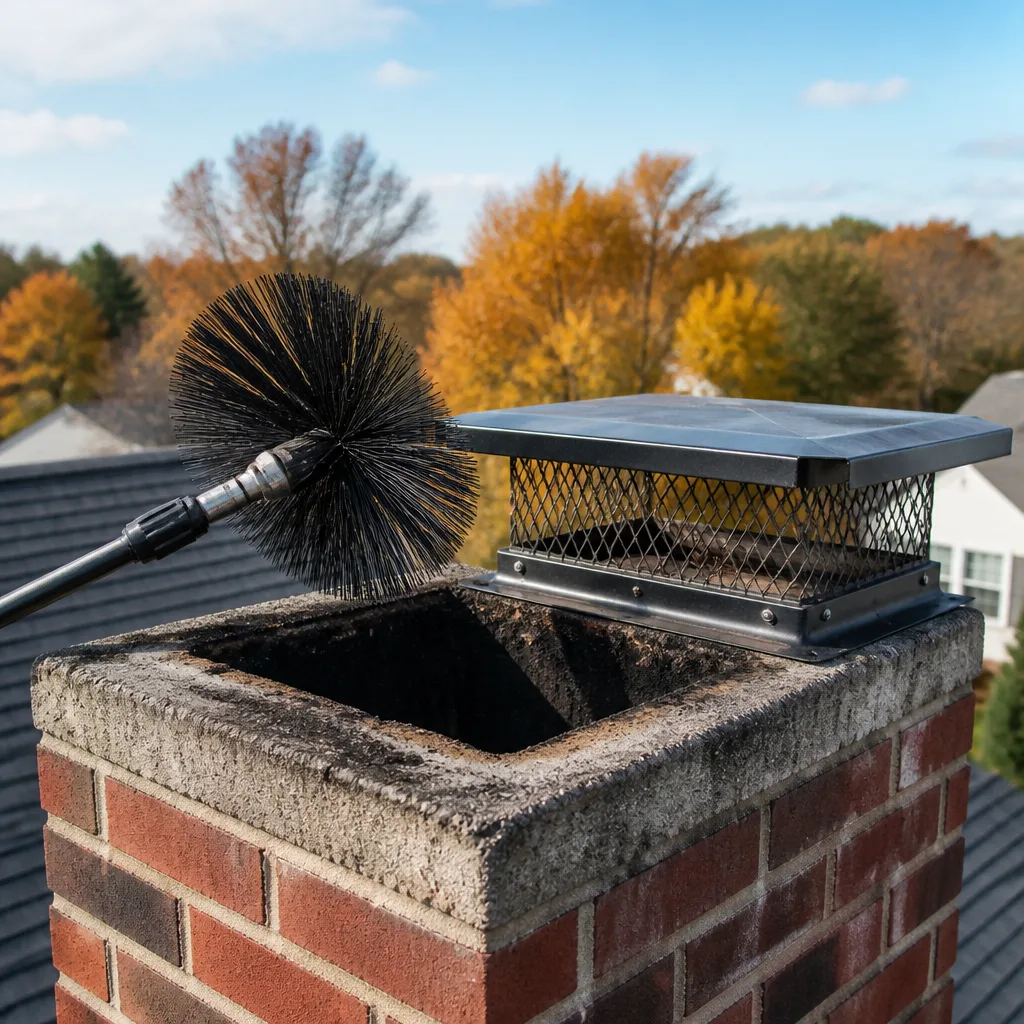 Sweep & inspection
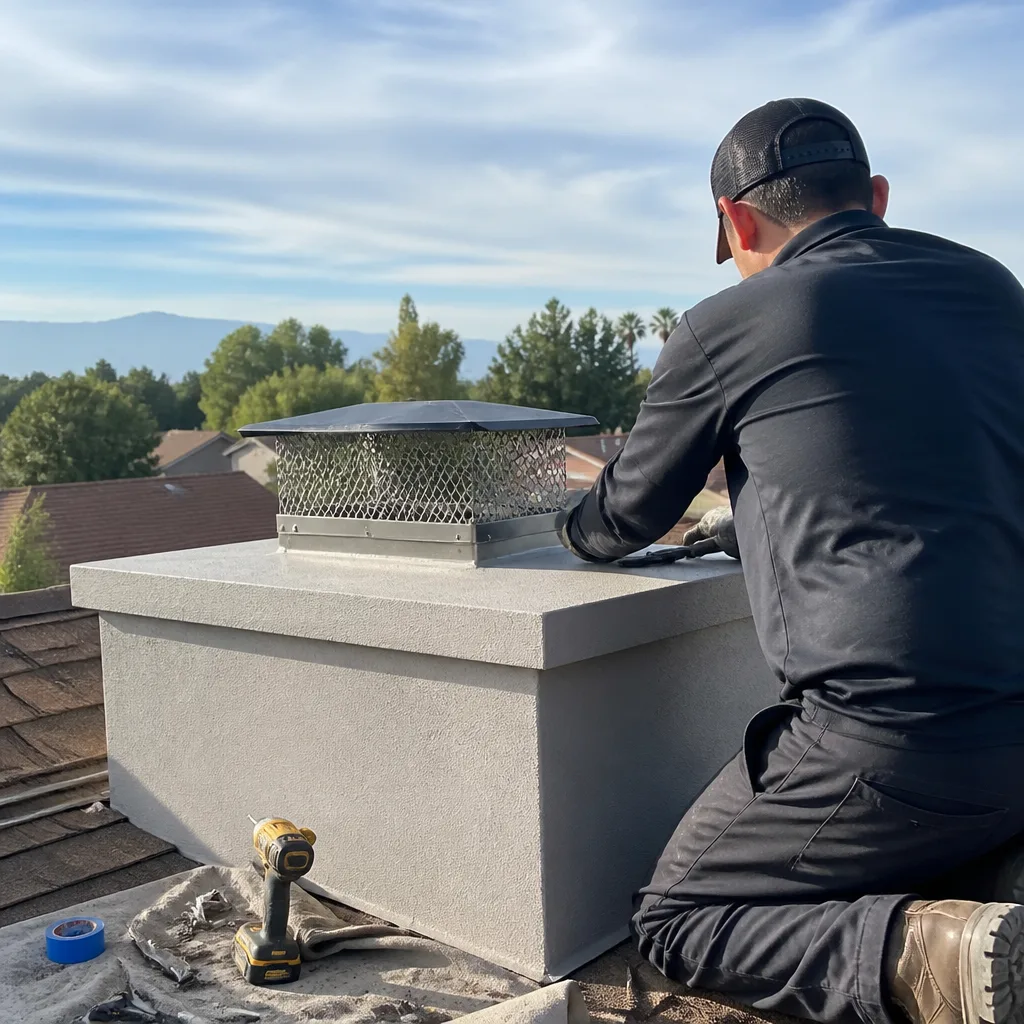
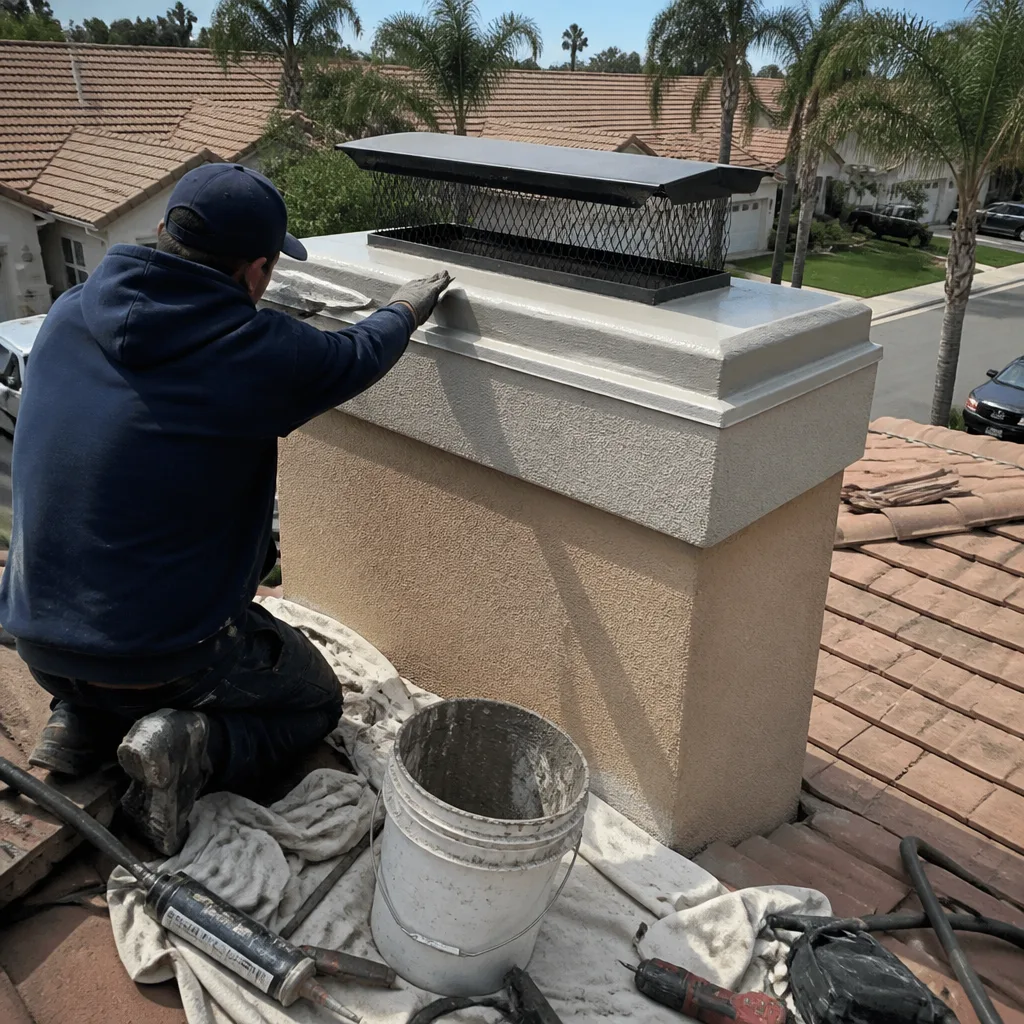
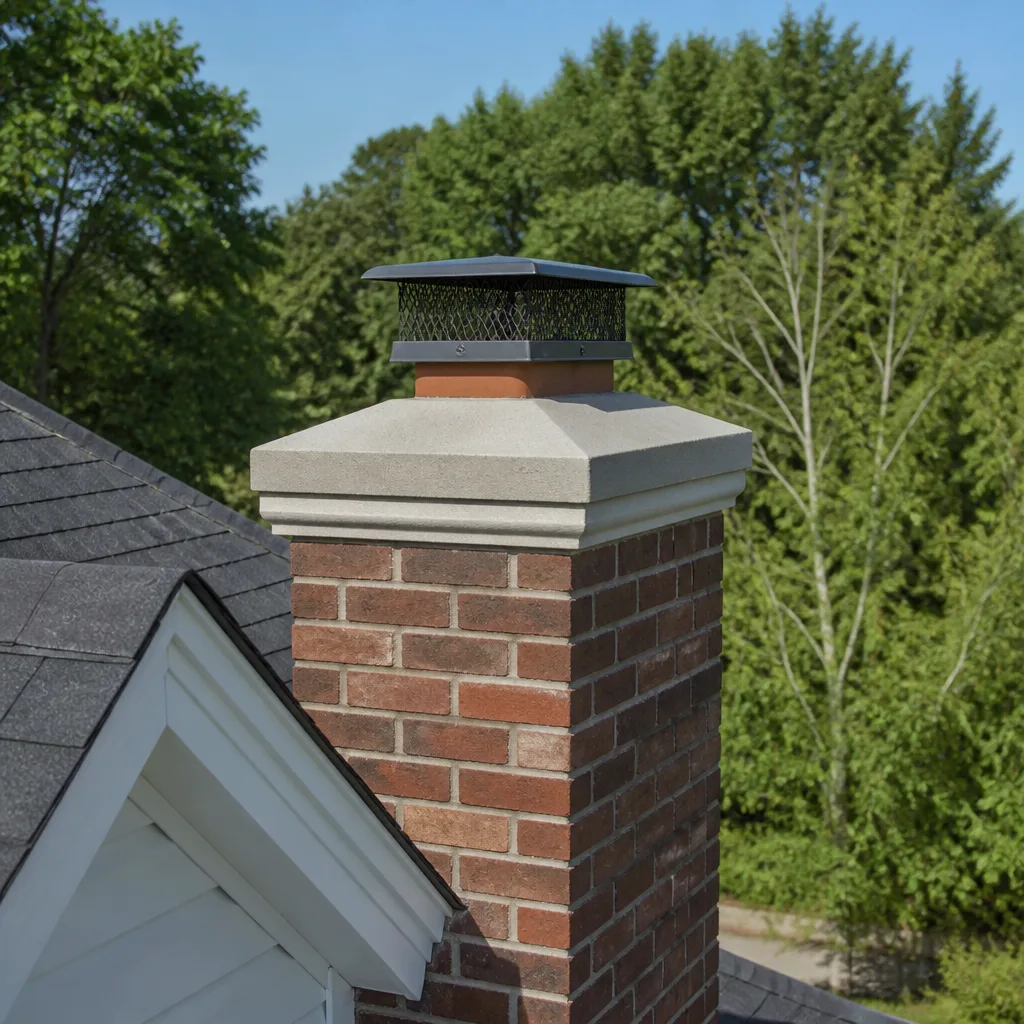 Caps & crowns
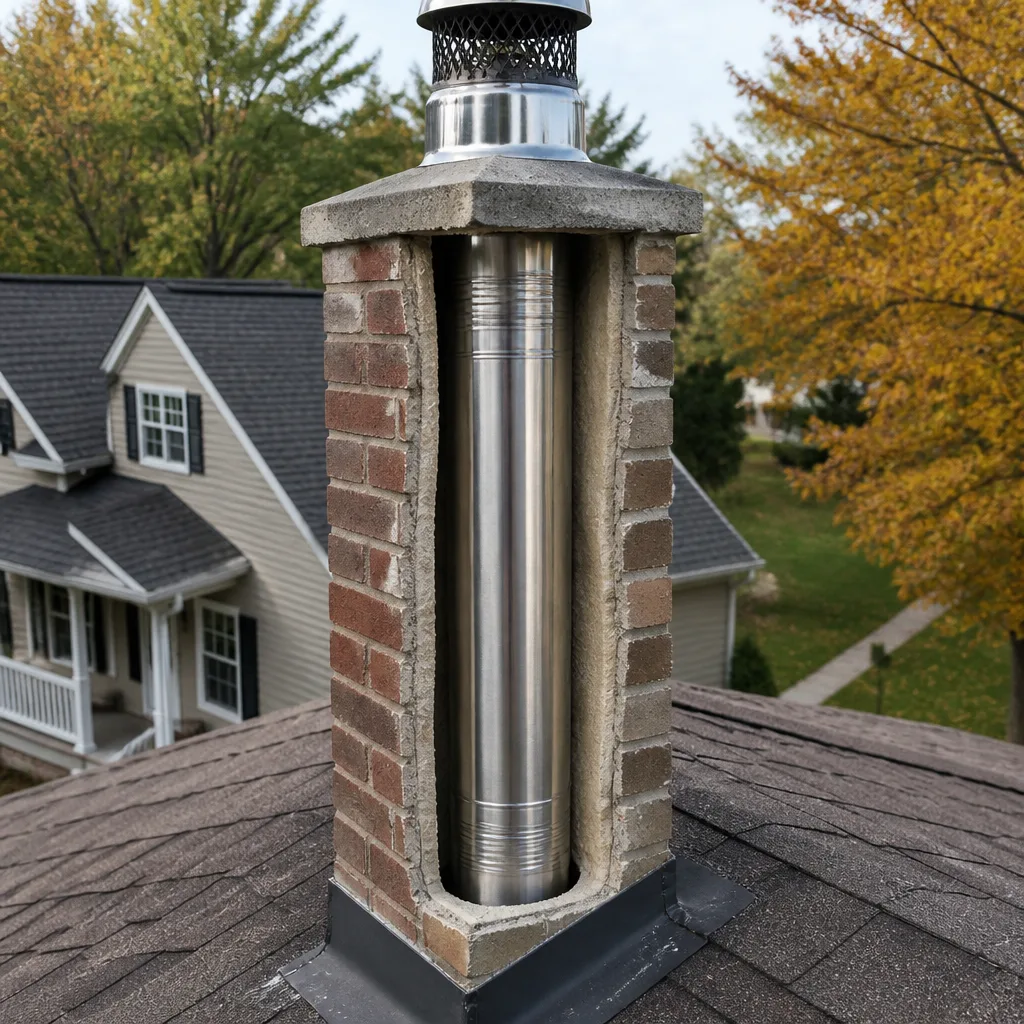 Flue relining
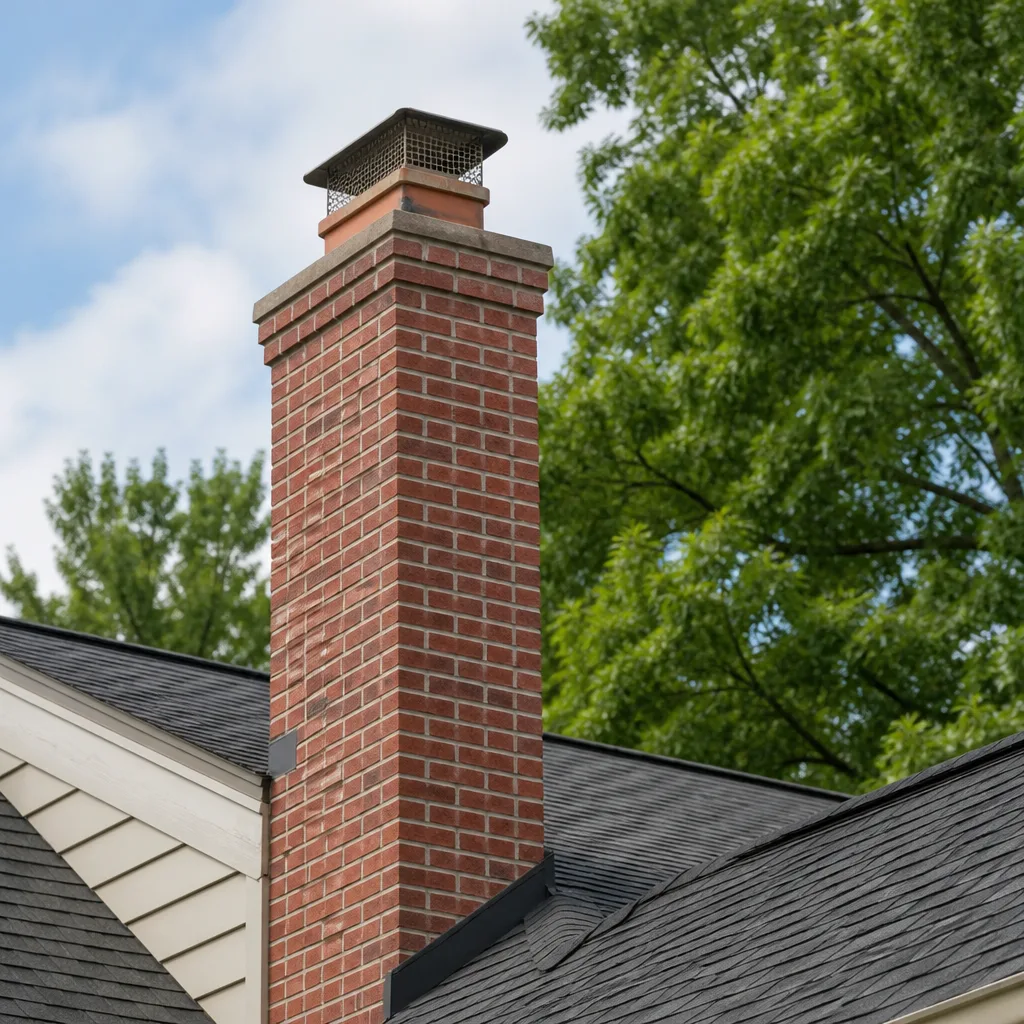 Masonry repair
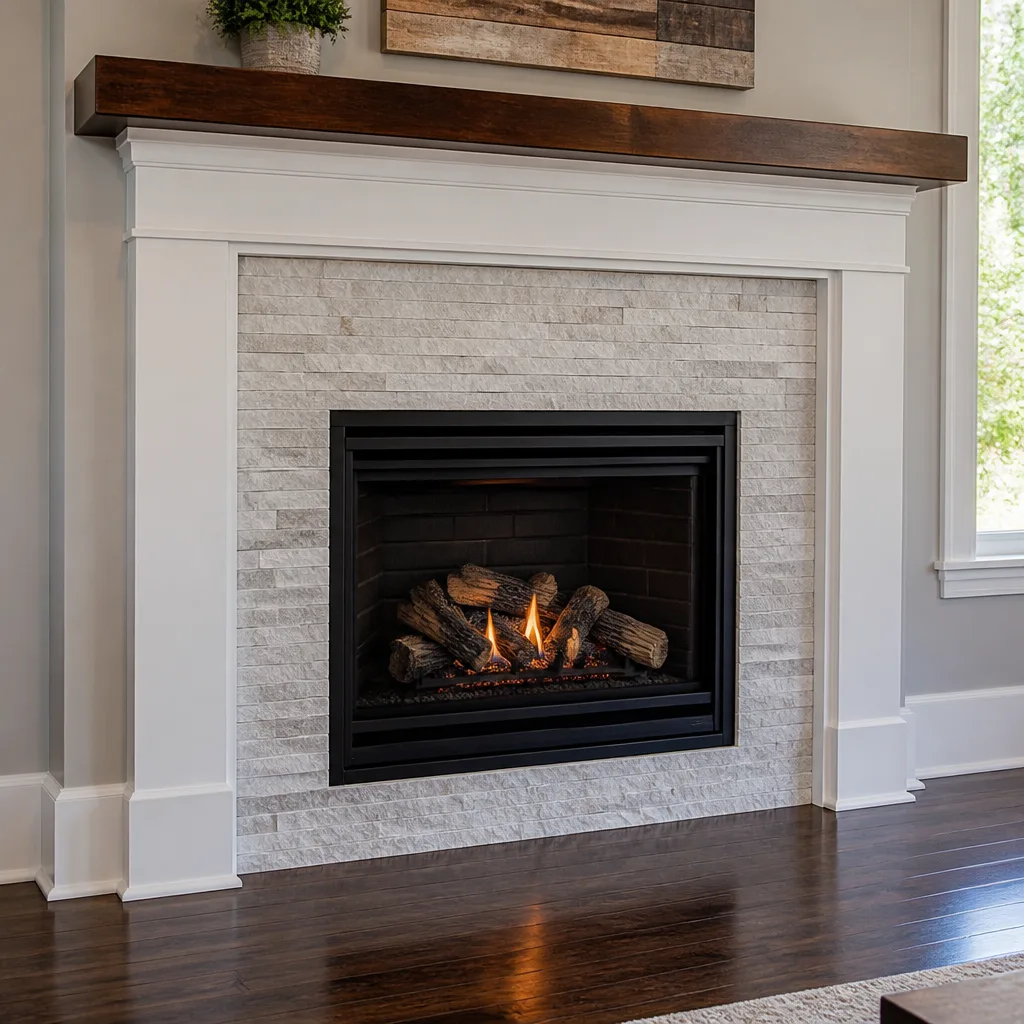 Gas fireplace service
Level 1 sweep and inspection to the NFPA 211 annual standard - flue, crown, cap, and flashing checked and photographed
Chimney sweep logs do not sweep chimneys. They loosen some creosote - which then falls where a brush and vacuum still have to collect it.
DIY vs Professional Chimney Cleaning: The Chino Homeowner’s Decision Guide
Every fall, the hardware stores in Chino put chimney cleaning kits on the endcap: a fiberglass rod set, a wire brush, and a plastic tarp, usually for under sixty dollars. The implication is that sweeping a chimney is like cleaning a gutter – unpleasant but simple. What those kits can actually do is remove Level 1 creosote, the dry, flaky soot left behind after occasional fires. What they cannot do is remove Level 2 creosote, the tar-like glaze that forms when flue temperatures stay low, or Level 3 creosote, which is essentially a hardened fuel lining inside your flue. This guide walks through the three deposit levels, what homeowner equipment can realistically handle, where the line is, and which Chino-specific scenarios make DIY defensible or genuinely dangerous. For more, see our more guides & resources.
Styles & brands we work with
- Sweep & inspection
- Caps & crowns
- Flue relining
- Masonry repair
- Gas fireplace service
Quick Answer
DIY chimney cleaning can work for a narrow set of conditions: a straight flue, light seasonal use, dry Level 1 creosote, and a homeowner willing to inspect the results with a bright light. Professional cleaning becomes necessary when deposits are glazed or heavy, when the flue has bends, when the appliance is a wood stove or insert, or when you need camera verification of the flue’s structural condition. In Chino, most wood-burning fireplaces that see regular winter use fall into the professional category within two to three years of their last real sweep.
Table of Contents
- The Three Deposit Levels: What You’re Actually Removing
- The Equipment Gap: Consumer Kit vs Professional Rig
- The Containment Problem: Why Dust Control Decides This Debate
- Chino-Specific Conditions That Change the Math
- When DIY Is Defensible: The Gas Insert Scenario
- Insurance and Liability: What Happens After a Fire
- How to Determine Your Deposit Level Before Buying Anything
- Common Mistakes to Avoid
- When to Call a Professional
- Frequently Asked Questions
- The Bottom Line
The Three Deposit Levels: What You’re Actually Removing
Chimney cleaning is not one task. It’s three different tasks wearing the same name. The Chimney Safety Institute of America (CSIA) classifies creosote deposits into three levels, and each one demands different tools, different time, and a different honest answer about whether a homeowner should attempt it.
Level 1: Dry, Flaky Soot
Level 1 creosote is what most people picture when they think about chimney cleaning. It’s a fine, dark powder or flaky material that brushes off the flue wall with light pressure. It forms when fires burn hot and the flue stays warm enough to carry most combustion byproducts out before they condense. A consumer rod-and-brush kit can genuinely remove Level 1 deposits from a straight flue. The brush knocks the soot loose, it falls to the firebox, and you vacuum it out. This is the deposit level where DIY is, at worst, a messy afternoon.
Level 2: Glazed, Crusty Tar
Level 2 creosote is a different material entirely. It’s black, shiny in places, and has the consistency of hardened road tar. It forms when flue gas temperatures stay in the low range for extended periods, generally when fires are damped down overnight or when green wood gets burned. A wire brush from a hardware store kit will skate across Level 2 deposits without removing them. In many Chino homes, we see this condition after one or two seasons of burning wood purchased as “seasoned” that still carries 25 to 30 percent moisture. Removing Level 2 creosote requires rotary equipment with chains or stiff cable loops that can actually abrade the surface, or a chemical treatment like Saver Systems products that converts the deposit to a removable ash. Neither option exists in a retail kit.
Level 3: Hardened Fuel Coating
Level 3 creosote is the condition that chimney fires are made of. It’s a thick, rock-hard, shiny coating, sometimes an inch or more thick in places, and it is essentially concentrated fuel adhered to the flue wall. It forms after years of neglect or after a chimney fire that partially burned off lower-level deposits and left behind a denser, carbonized residue. No consumer tool can touch Level 3 creosote. Even professional rotary equipment often needs multiple passes. In many cases, the flue liner itself has been damaged beneath the coating and requires repair work. This is the condition where we bring in HeatShield resurfacing or evaluate a DuraFlex liner replacement, because cleaning alone doesn’t address what the deposits have done to the flue. A homeowner who finds Level 3 deposits during a DIY attempt should stop, close the damper, and call someone with the right equipment.
The Equipment Gap: Consumer Kit vs Professional Rig
The core equipment differences fall into four categories: agitation power, particulate capture, inspection capability, and deposit treatment chemistry.
Agitation
Consumer kits provide a manual wire brush on flexible fiberglass rods. It can reach the flue, and it can scrape Level 1 material. It cannot generate the rotational force needed for glazed deposits, and it cannot adapt to flue shape. Professional sweeps use rotary systems with motorized heads, chain flails, or stiff cable loops that physically cut through Level 2 material. Some systems can run either direction, which matters because sweeping a flue downward against the natural direction of the tile bevels is far less effective than sweeping in the correct orientation. That orientation is determined by the flue’s construction, which requires knowing what you’re looking at.
Particulate Capture
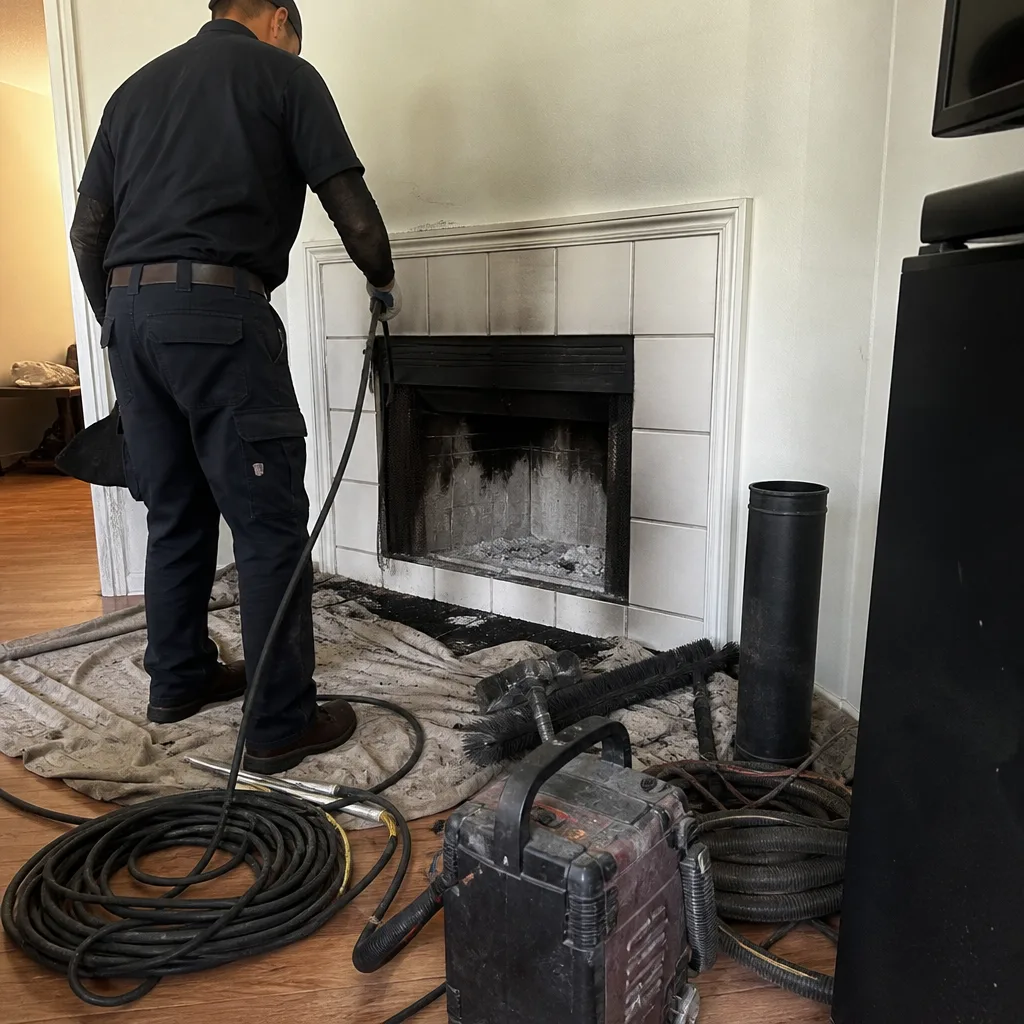
A homeowner with a Shop-Vac and a tarp is attempting to control dust. A professional setup uses a dual-motor HEPA vacuum, often with a second stage filter system, running continuously during the sweep. The vacuum doesn’t just clean up afterward. It creates negative pressure at the firebox opening during the entire process, so that dislodged soot is pulled out of the living space rather than drifting into it. This is a different activity than vacuuming the firebox after brushing. It’s airborne particulate control during the agitation itself.
Inspection
After any sweep, someone has to look at the flue and determine whether the walls are actually clean and whether the liner is intact. A flashlight up the flue from the firebox shows you the first few feet. An articulating camera system shows you the entire flue, including the areas around bends, the smoke chamber, and the condition of every mortar joint. In our work, we don’t tell a Chino homeowner their flue is sound without running a camera through it. The homeowner version of this inspection is, realistically, looking at the brush to see if it came back dirty.
Chemistry
When rotary equipment alone won’t do it, professionals have chemical tools. Saver Systems products and similar deposit reducers are applied as a spray or powder, left to react with the creosote for a period, then removed with the rotary system. These are not retail products. They’re industrial chemistry designed to alter the deposit itself. No amount of effort with a consumer brush substitutes for this step when it’s needed.
The Containment Problem: Why Dust Control Decides This Debate
Here’s the issue that rarely appears in DIY chimney cleaning articles: the fine particulate from a flue sweep is not normal household dust. It’s sub-10-micron particles of creosote, ash, and soot, and it will find its way into every textile in the room if containment fails. A tarp over the fireplace opening, which is what most consumer guides recommend, does not create a seal. It drapes. Dust finds the gaps.
Professional sweeps address this with a combination of physical barriers, negative-pressure vacuum systems, and method. The vacuum runs the entire time. The brush work happens inside that negative pressure environment. The firebox opening is sealed around the working access point, not just covered loosely. And the work happens in a sequence: from the top down, with the vacuum pulling the loosened material out as it’s generated.
For a homeowner attempting this in an occupied living room in Chino, the containment problem is usually the moment the DIY project ends. The first pass with the brush produces a visible cloud, the tarp shifts, and the dust that took thirty seconds to create takes a week to clean from the carpet, the curtains, and the HVAC return. This is not a matter of being careless. It’s a matter of not having a dual-motor HEPA vacuum pulling 200-plus CFM at the firebox while agitating the flue. The tool is the difference.
Chino-Specific Conditions That Change the Math
Chino’s climate shapes how chimneys behave in ways that affect the DIY decision. The winters here are short and mild compared to mountain communities, which means wood-burning fireplaces in Chino tend to get used in bursts: a cold snap in December, a few fires around the holidays, maybe some use in January. What that pattern produces is not heavy creosote from constant burning. It’s the on-again, off-again pattern of low-temperature fires that never let the flue get fully hot before the fire is left to die out. Partial burns and smoldering coals produce Level 2 deposits more readily than hot, complete burns do.
We also see a distinct pattern in Chino homes built in the 1970s through 1990s, many of which have masonry chimneys with clay tile liners. Clay tile is durable, but it’s not forgiving when it comes to thermal stress or moisture intrusion. A homeowner running a brush up a cracked clay tile liner can dislodge a section of it without knowing it happened. The flakes that come back on the brush look like creosote. They may be pieces of the flue.
Gas appliances change the equation too. Many Chino homes have converted wood fireplaces to gas log sets or gas inserts. Gas produces no creosote, but it does produce a fine, acidic residue that can accumulate on the flue walls, and the absence of visible smoke leads many homeowners to assume the chimney never needs cleaning. The maintenance interval is longer, but the inspection requirement doesn’t go away. A gas appliance venting into a damaged flue is a carbon monoxide concern, not a cosmetic issue. And in Chino, where many homes run their gas fireplaces as supplemental heat during winter evenings, that flue sees more hours of use than homeowners estimate.
The Chimney Sweep in Chino service we provide starts with an inspection for all of these conditions, because the cleaning decision and the repair decision are the same decision. You can’t clean a damaged flue into being safe.
When DIY Is Defensible: The Gas Insert Scenario
There is one Chino scenario where DIY chimney cleaning makes sense, and it’s specific enough to describe in full. It looks like this: a gas insert or gas log set installed in a masonry fireplace with a straight, accessible flue liner, where the homeowner burns the appliance seasonally, and where the previous inspection showed no cracks, no gaps, and no damage. In that case, the annual maintenance is light. The deposits are fine and powdery. The flue is straight enough that a brush actually contacts the walls through the full length. And the homeowner is the same person who looked at the flue last year and can recognize when something looks different.
Even in that scenario, the homeowner should have a few things: a brush sized correctly for the liner dimensions, a drop cloth that’s actually secured around the firebox opening with tape, a vacuum with a HEPA filter (not a standard shop filter, which sends the finest particles right back into the room), and a bright inspection light. The work should happen on a mild day. The homeowner should stop if the brush encounters resistance, if the flue visibly narrows, or if what comes back on the brush is shiny, sticky, or thick.
We’re not going to argue that everyone needs a professional sweep every time. That would be false. What we will argue is that the DIY path requires knowing what the deposit looks like before you begin, and that knowledge comes from either experience or a professional inspection. If you haven’t had a camera inspection in the last few years, you don’t actually know what condition your flue is in, and that’s the foundation the entire DIY decision rests on.
Insurance and Liability: What Happens After a Fire
California homeowners should understand the interplay between DIY chimney maintenance and insurance claims before they buy a brush kit. If a chimney fire occurs and the insurance adjuster investigates, the first question they’ll ask is when the chimney was last inspected and cleaned, and who did the work. A documented professional sweep with a dated report is evidence of reasonable maintenance. A homeowner who says they cleaned the flue themselves with a kit has no documentation, no third-party verification of the flue’s condition, and no record of what was actually removed or whether the liner was sound afterward.
In practice, this means a claim that might otherwise be processed as a standard fire loss can become a contested claim, with the insurer arguing that the homeowner failed to maintain the system properly and that the failure contributed to the loss. That’s not to say every DIY sweep leads to a denied claim. It’s to say that the paper trail matters, and a professional sweep produces a paper trail. We document every sweep we perform in Chino, including what we found, what we removed, and what the camera showed before and after.
There’s also the practical liability of doing the work incorrectly. A homeowner who dislodges a section of clay liner during a DIY sweep and then runs the fireplace doesn’t know they’ve created a pathway for heat to reach combustible materials. The first they know of it is a fire in the wall. The professional difference isn’t just the equipment. It’s the ability to look at what came out of the flue and recognize that it’s not soot.
How to Determine Your Deposit Level Before Buying Anything
Before you spend money on equipment, you need to know what you’re dealing with. Here’s the assessment process, in order:
- Wait for daylight, open the damper, and look. Use a bright flashlight and a mirror if you have one. What you’re looking for is the surface of the flue walls, not the darkness. Shine the light at an angle. If the walls look dusty and the material is dull black or brown, that’s likely Level 1. If the walls look shiny, crusty, or bubbled, that’s Level 2. If the walls look thickly coated, almost like the flue is narrower than it should be, that’s Level 3.
- Reach up with a fireplace poker or a dedicated scraping tool. Scrape a small section of the flue wall about two feet above the damper. What comes off matters. Fine powder or dry flakes mean Level 1. A scrape that removes only a shallow groove from a glossy surface means Level 2. A scrape that barely marks a rock-hard surface means Level 3.
- Measure the thickness. If you can see a visible coating that looks like it’s an eighth of an inch thick or more, assume Level 2 or Level 3 regardless of what the scrape test shows. Thickness is the deciding factor, not color.
- Check the smoke chamber. The area just above the damper, where the smoke compresses before entering the flue, accumulates deposits faster than the flue itself. Look at that area specifically. If it’s heavily coated, the flue above is likely in similar condition even if you can’t see it well.
- Make the call honestly. Level 1 with a straight flue and light use: DIY is reasonable. Anything else: the brush kit won’t do the job, and you’ll either give up frustrated or convince yourself it worked when it didn’t.
In our experience in Chino, the honest self-assessment usually lands on Level 2. The fires here burn low and intermittent, and glazed deposits develop faster than homeowners expect. If you’re not sure what you’re seeing, a professional inspection costs less than a botched DIY attempt, and it answers the deposit-level question definitively. See our Chimney Cleaning Cost Breakdown: The Chino Homeowner’s Reference for 2026 to plan your budget.
Common Mistakes to Avoid
- Starting the job before checking the deposit level. If the flue has Level 2 or Level 3 creosote, no consumer brush will remove it, and you’ll have spent money and a day’s effort to leave the hazard in place. Check first.
- Using a standard shop vacuum for fireplace cleanup. A standard filter lets the finest particles escape back into the room, which is exactly the material you’re trying to remove. If you DIY any part of this, use a HEPA-filtered vacuum or rent one.
- Brushing a flue without ever having inspected the liner. In Chino’s older masonry homes, clay tile liners can be cracked or separated. A brush run through a damaged liner can worsen the damage, and the homeowner won’t know it happened. Inspection always precedes cleaning.
- Assuming gas fireplaces don’t need cleaning. Gas produces no creosote, but it produces acidic residue that damages liners over time, and a blocked or damaged flue on a gas appliance is a carbon monoxide hazard. The inspection interval is longer, but it’s not zero.
- Treating a creosote log as a substitute for sweeping. Creosote-removal logs can change the character of Level 1 deposits, making them easier to remove during the next sweep. They do not clean the flue, and they do nothing for Level 2 or Level 3. The manufacturer’s own instructions say to sweep after use.
- Cleaning from the firebox only. Some flues can be cleaned from below with the damper open. Others require top-down access from the roof, which involves roof safety considerations and equipment a homeowner may not have. Know which your flue requires before you start.
- Postponing because “we only use the fireplace a few times a year.” Intermittent, lower-temperature fires produce glazed deposits faster than hot, complete burns. Light use is not the same as low maintenance need.
When to Call a Professional
Call a professional when your deposit inspection shows anything beyond light Level 1 material. Call when the flue has bends you can’t see around. Call when you’ve got a wood stove or insert connected to a liner, because those systems require specialized cleaning from the top down. Call when you haven’t had a camera inspection in three years or more. Call when what you scraped off the flue wall is shiny, when the flue looks narrower than it should, or when you simply don’t want fine creosote particulate distributed through your living room. And call before you buy a house with a fireplace in Chino. A pre-purchase chimney inspection finds problems that a home inspector’s flashlight pass doesn’t.
Chimney Sweep Chino offers free estimates in Chino. Call (866) 321-6641 and we’ll assess what you’re working with before you spend money on equipment that might not do the job.
Frequently Asked Questions
A standard chimney sweep in Chino typically runs between $180 and $300 for a single flue with a standard fireplace, depending on the deposit level and access. Level 2 deposits requiring rotary work run higher, often $350 to $500 with the chemical treatment included. Level 3 work is priced per job because it often involves repair evaluation. Call (866) 321-6641 for an exact quote on your fireplace. Estimates are free.
You can remove Level 1 creosote from a straight flue with a consumer brush kit, provided you have the right size brush and a HEPA vacuum. You cannot remove Level 2 or Level 3 deposits with any retail kit, regardless of quality, because those deposits require rotary agitation or chemical treatment that isn’t sold to consumers. The brush quality isn’t the limiting factor. The deposit chemistry is.
The CSIA standard is an annual inspection and a sweep when deposits reach one-eighth of an inch, which for most Chino wood-burning fireplaces is every one to two seasons of regular use. Gas fireplaces can go longer between cleanings but still need periodic inspection for liner condition. The one-eighth-inch standard matters more than the calendar. Light use with hot fires burns cleaner than heavy use with damped-down, low-temperature fires.
No. Creosote-removal logs alter some Level 1 deposits so they’re easier to brush off during the next cleaning. They do not remove deposits, they do not clean the flue, and they have no meaningful effect on Level 2 or Level 3 creosote. If you use a creosote log, you still need to sweep the flue afterward. That’s what the product instructions say, and it matches what we see on the job.
Cleaning removes deposits. Inspection evaluates the structural condition of the flue: the liner, the mortar joints, the crown, the flashing, and the clearances. A flue can be clean and unsafe at the same time. Our Chimney Repair in Chino work often starts with an inspection that found damage no amount of sweeping would have addressed.
Yes. Gas fireplaces don’t produce creosote, but they do produce acidic condensate that corrodes liners over time, and a gas appliance venting into a damaged flue can send carbon monoxide into the home. The cleaning interval is longer than a wood-burning fireplace, but the inspection requirement doesn’t go away. Annual visual inspection with a periodic camera inspection is the right approach.
Deposits build layer over layer, and the flue gets narrower. Lower-temperature fires then produce more condensation, which accelerates the build. Eventually the creosote reaches a thickness where a hot fire can ignite it, producing a chimney fire that can crack liners, damage the flue, and spread to the structure. The carbon monoxide risk also rises as the flue narrows and draft weakens. The cheapest time to deal with it is before it reaches that state. Call (866) 321-6641 and we’ll tell you what you’re actually looking at.
The Bottom Line
The DIY chimney cleaning question in Chino comes down to deposit chemistry, not effort or willingness. A homeowner with a straight flue, light Level 1 soot, and the right dust control can handle an annual sweep. A homeowner with glazed Level 2 deposits, a bending flue, or an un-inspected liner cannot, and no brush kit will change that. The tools that professionals bring, including rotary systems, HEPA capture, and camera inspection, exist because deposits beyond first-stage buildup physically require them. Before you buy equipment, look at what’s on your flue walls. Then make an honest call. If it’s anything beyond light soot, Chimney Sweep Chino home can help. We do the sweep, the inspection, and the repair work if needed, all through the same crew, so you’re not coordinating three vendors to find out what’s actually happening in your flue. And if your dryer vent hasn’t been checked this year, that’s a separate fire risk we handle through our Dryer Vent Cleaning in Chino service. Both systems deserve the same level of attention.
Written by the team at Chimney Sweep Chino, serving Chino since 2011.
See the difference
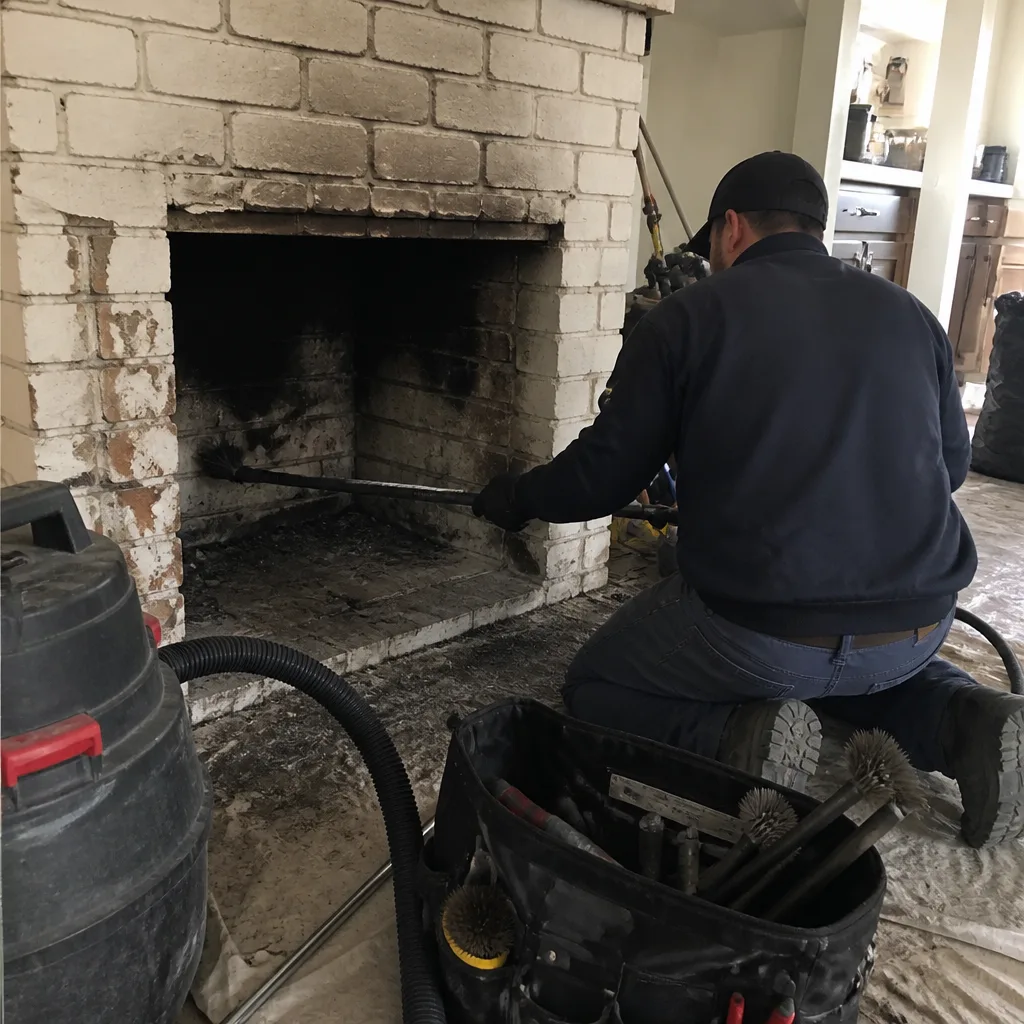 Before
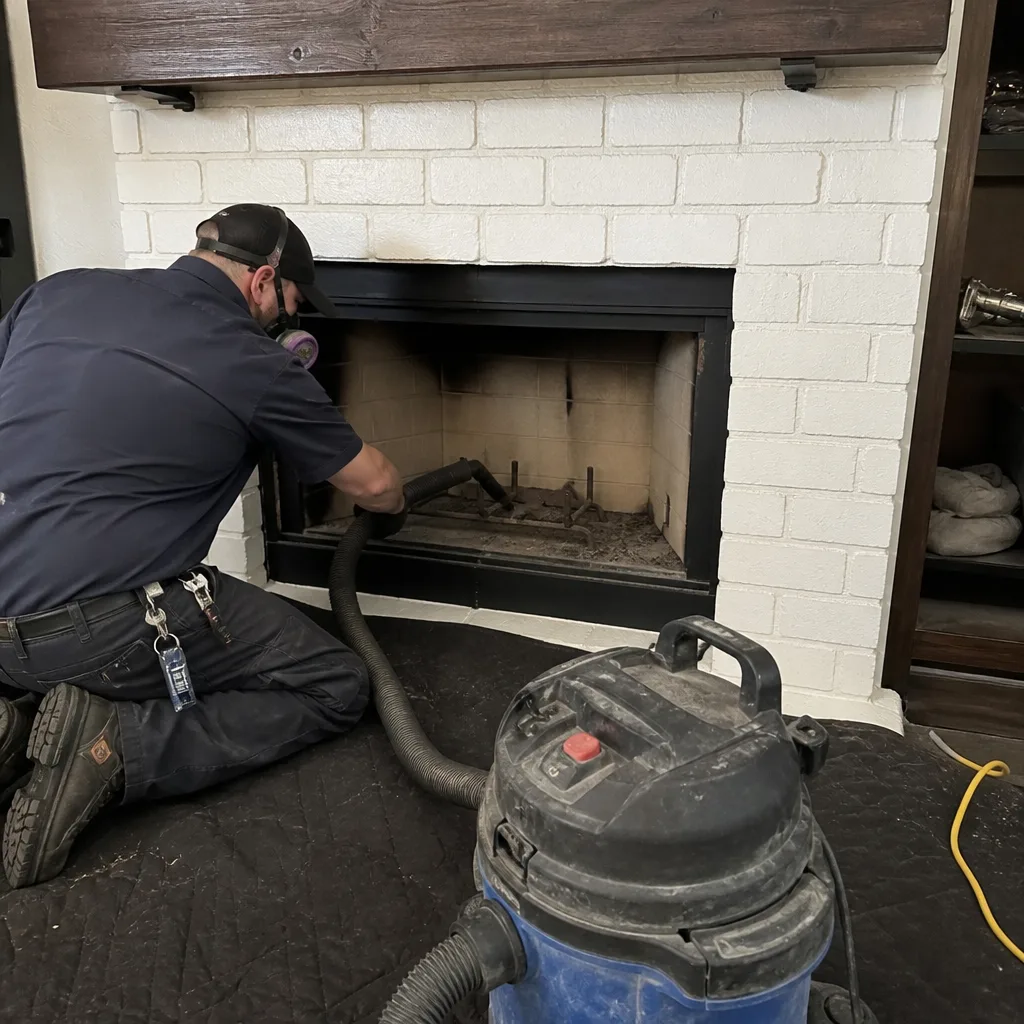 After
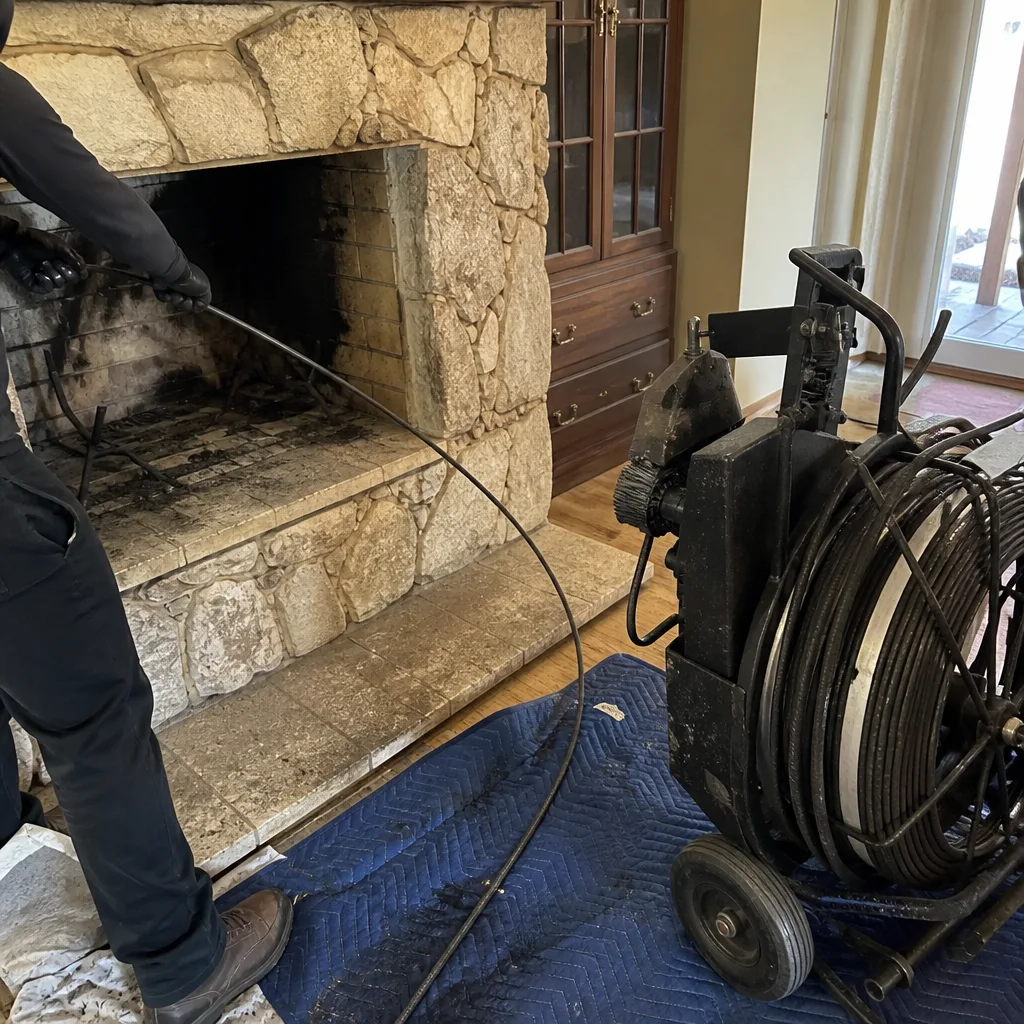 Before
 After
 Before
 After