
Last updated November 2, 2026
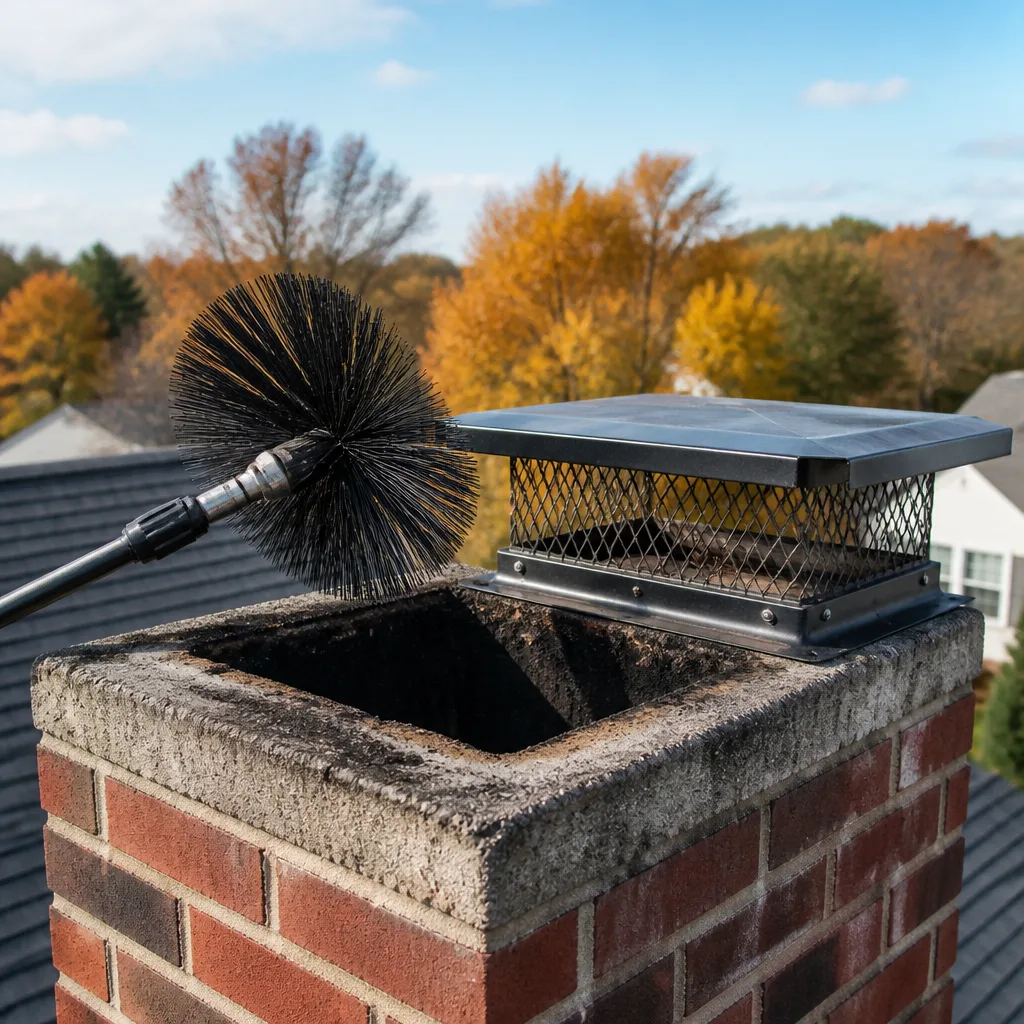 Sweep & inspection
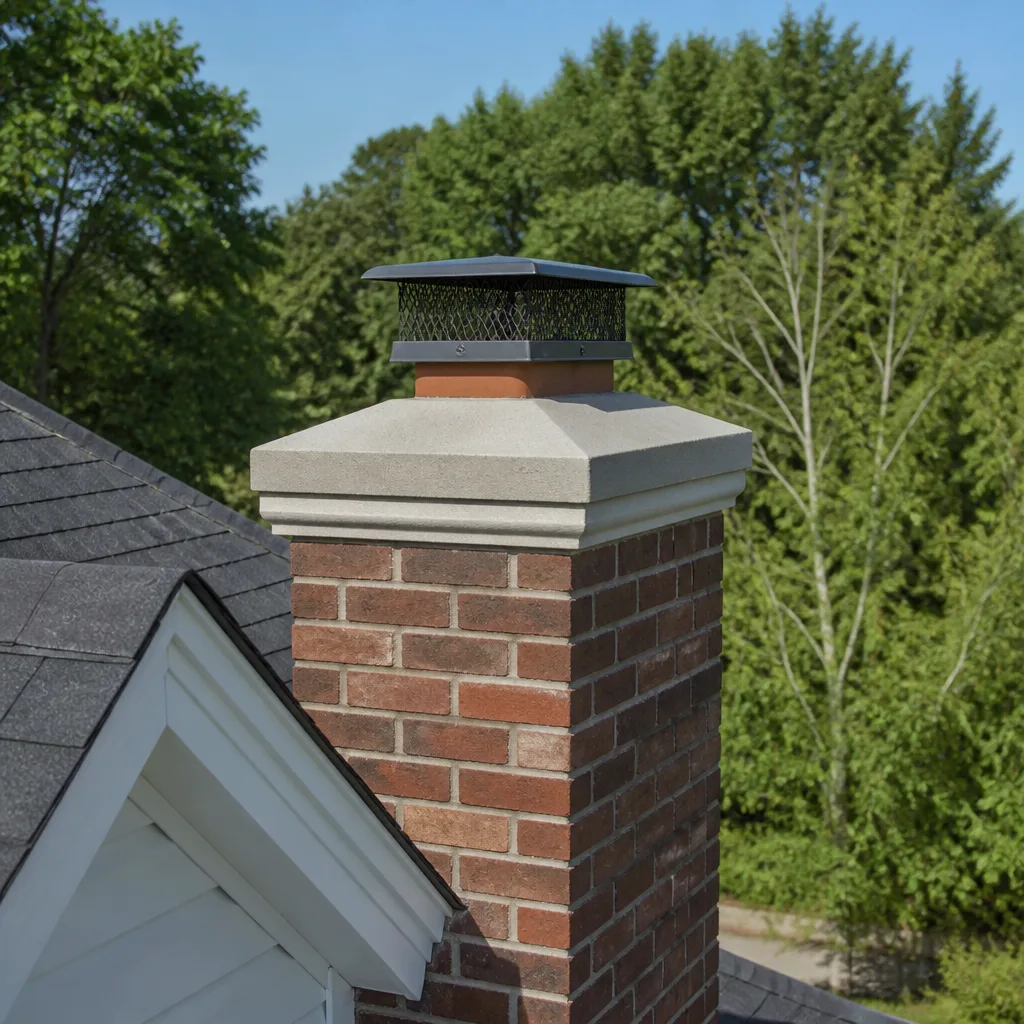 Caps & crowns
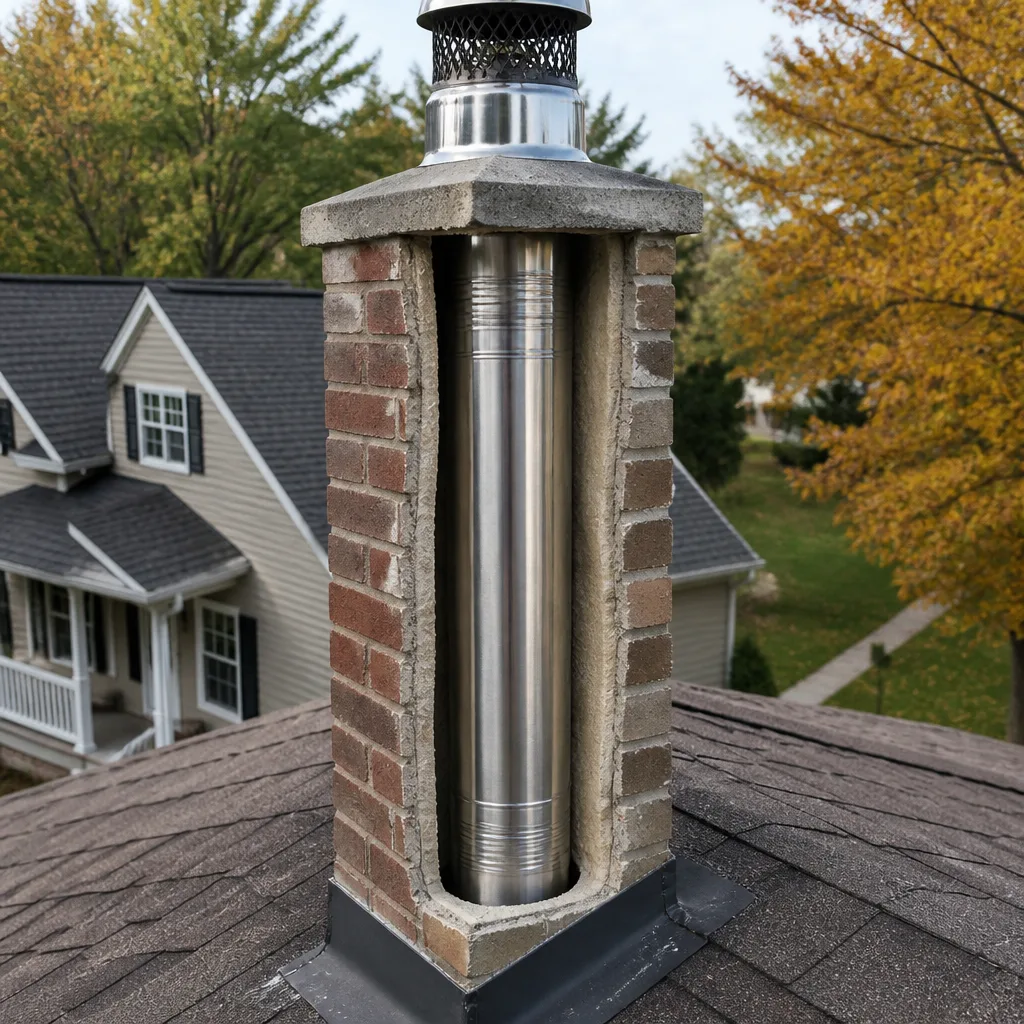 Flue relining
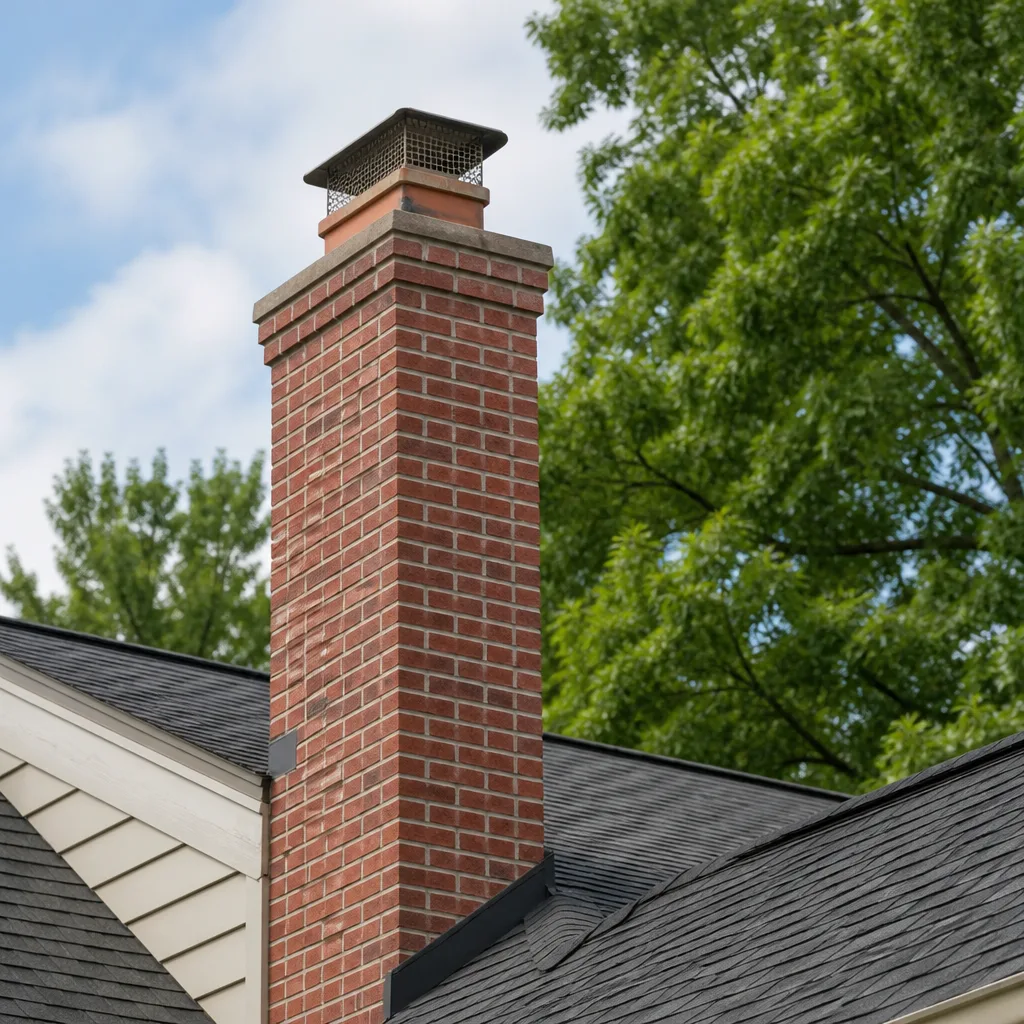 Masonry repair
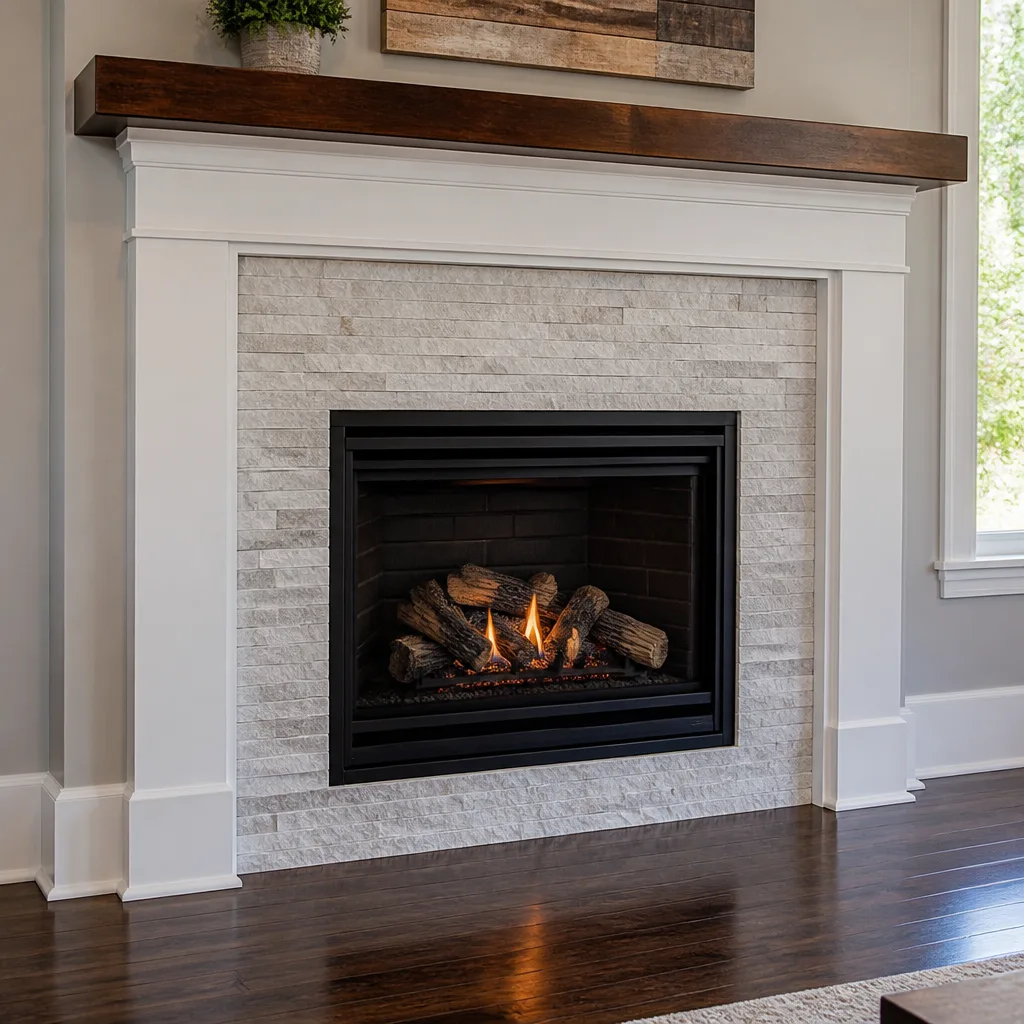 Gas fireplace service
Level 1 sweep and inspection to the NFPA 211 annual standard - flue, crown, cap, and flashing checked and photographed
Chimney sweep logs do not sweep chimneys. They loosen some creosote - which then falls where a brush and vacuum still have to collect it.
Chimney Sweep Maintenance Checklist for Chino Homeowners
Most chimney checklists you’ll find online read like they were written for a house in Ohio. They talk about rain, snow, and freezing temperatures. But Chino’s problem isn’t moisture volume. It’s what happens when a clay crown sits under 260-plus days of high-UV sun, then gets hit with a single winter downpour. Thermal expansion does its quiet work, hairline cracks form, and suddenly a flue liner that should last 30 years starts spalling after eight. This guide is organized by component, not just frequency, because a checklist that says “inspect your chimney” without telling you what failure actually looks like in Chino’s specific climate is not a checklist. It’s a shrug. By the end, you’ll know exactly what to look at, when to look, what’s normal for almond and citrus wood burners in San Bernardino County, and what documentation you should keep for your own records and your insurance file.
Quick Answer
A Chino homeowner should inspect their chimney twice a year: once in early October before burning season starts, and once in January after the first month of regular use. The inspection must cover seven components in order: chase cover, crown, cap, liner, damper, smoke chamber, and firebox. If you burn almond or citrus wood (common throughout the Chino Valley), sweep the flue every 40 to 50 burns rather than the standard 60, because these woods produce a finer, stickier residue that builds faster on corrugated stainless liners.
Styles & brands we work with
- Sweep & inspection
- Caps & crowns
- Flue relining
- Masonry repair
- Gas fireplace service
Table of Contents
- Why Chino’s Climate Changes the Checklist
- The Moisture Path: Chase Cover and Crown (What Everyone Skips)
- The Cap and Liner: Your Flue’s First Line of Defense
- The Damper: The Component That Lies to You
- The Firebox and Smoke Chamber: Where Residue Hides in Plain Sight
- Pre-Season Check (October): What to Look For Before First Burn
- Mid-Season Spot-Check (January) and Post-Season Documentation (March)
- Wood Types in Chino: Almond, Citrus, Oak, and What Each Leaves Behind
- Common Mistakes to Avoid
- When to Call a Professional
- Frequently Asked Questions
Why Chino’s Climate Changes the Checklist
Chino gets roughly 14 to 17 inches of rain a year. Compare that to Seattle’s 38 or Atlanta’s 50, and it sounds like moisture shouldn’t be a structural concern. But the failure mode here is not steady water exposure. It’s UV degradation followed by sudden saturation. The San Bernardino County sun bakes masonry crowns and chase covers for most of the year. Clay loses its surface binder. Sheet metal expands and contracts daily. The metal flashing on a chase cover in Chino can move a millimeter or two every afternoon, and after five or six years, the caulk joint at the seam shears.
Then December arrives. Chino’s rain events tend to be short and intense rather than drizzly. A single storm can drop a half-inch in 20 minutes. That water hits a crown with micro-fractures and follows gravity straight down into the flue chase or along the liner exterior. By the time you notice a stain on the ceiling below, the liner has already been sitting wet for weeks.
What makes the Chino checklist different from a generic one is this: we treat the crown and chase cover as the priority inspection point, not an afterthought listed after “clean the glass doors.” In our experience across Chino, the chase cover and crown are the two components homeowners never inspect and professionals most often find failed. A cracked crown in Chino can admit enough moisture in a single winter rain event to compromise the flue liner before the fireplace is used once. This is not a hypothetical. This is the call pattern from October through February.
The other climate factor is particulate load. Chino sits in a valley that traps airborne dust, agricultural residue, and seasonal inversion layers. Your chimney cap screens out birds, but fine particulates pass through and accumulate on the smoke shelf. If you burn wood on high-pollution days (and let’s be honest, the coldest nights are often the ones with burn restrictions elsewhere), you’re adding local dust to your own creosote profile. That means visual inspection of the smoke chamber matters more here than in coastal cities with marine airflow.
The Moisture Path: Chase Cover and Crown (What Everyone Skips)
Here is the number that matters: the cost of replacing a failed flue liner in Chino runs between $2,800 and $6,500 depending on height, access, and whether the old liner can be extracted cleanly. The cost of replacing a cracked crown or resealing a chase cover runs between $300 and $900. If you inspect one thing this year, inspect the top of the chimney. It is the cheapest fix and the most expensive neglect.
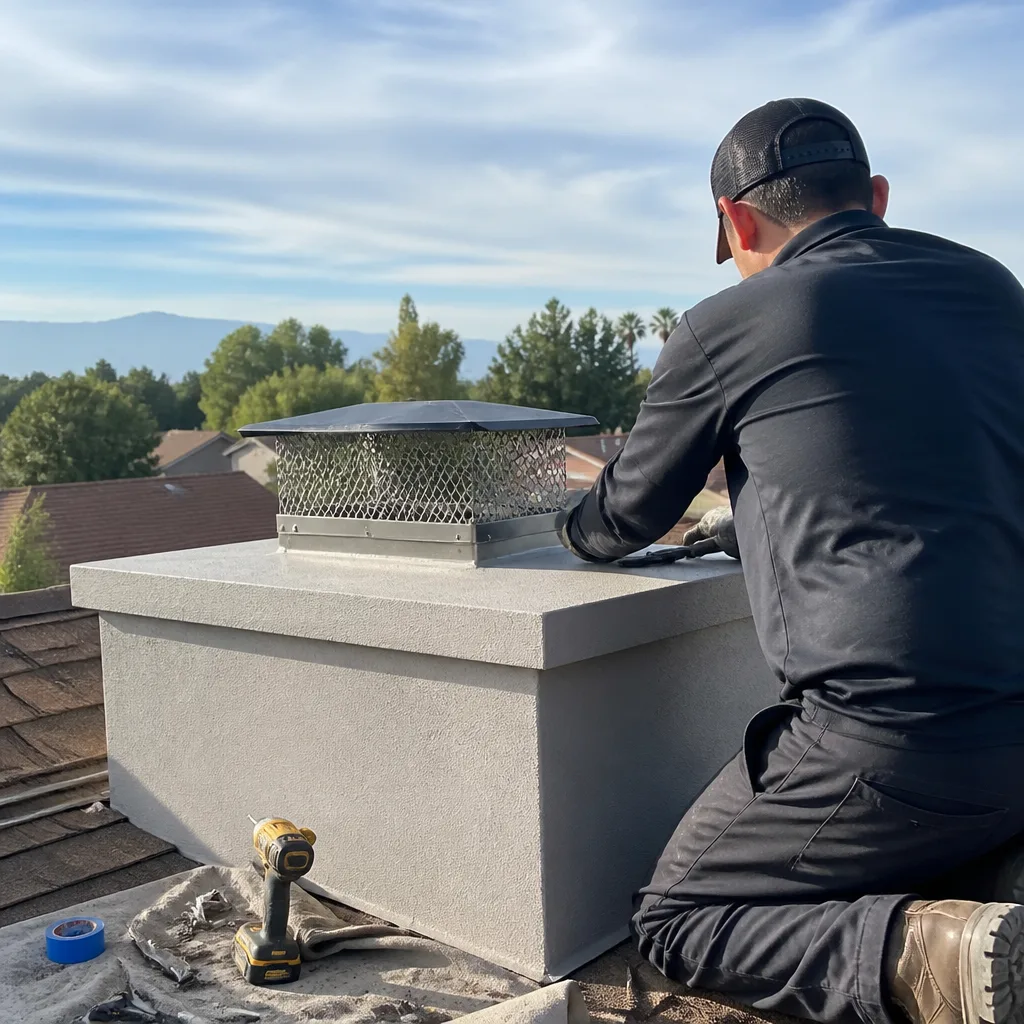
A chase cover is the galvanized or stainless steel lid that sits on top of a factory-built chimney (the metal-sided boxes you see on most Chino homes built after 1990). Its job is simple: keep water out of the chase. But it has seams, and it has a flange where the flue pipe penetrates. Chino’s UV exposure breaks down the sealant at those seams faster than the metal fails. Check for rust staining, lifted sealant, or any screw hole that has started to widen. If the cover is galvanized rather than stainless, expect replacement every 8 to 12 years in Chino’s sun. Stainless covers last longer but still need seam inspection.
A crown, by contrast, tops masonry chimneys. It’s a sloped concrete or mortar cap that directs water away from the flue opening. The classic Chino failure is hairline cracking from thermal stress. It starts as a web of fine lines no wider than a pencil lead. Water follows those lines, freezes rarely (Chino nights below freezing are uncommon but they happen), and widens them over repeated winter cycles. Within two or three seasons, spalling begins. You’ll see small chunks of crown material in the rain gutter or on the roof.
- Use a ladder to get to rooftop height, or use binoculars from the yard if roof access is unsafe. Do not walk on a tile roof.
- Look for hairline cracks radiating from the flue opening. Mark them with chalk if you need to track change over time.
- Check the slope. A properly built crown sheds water outward. If you see pooling after rain, the crown has settled or was poured flat.
- Inspect the joint between flue tile and crown. This is where the moisture enters. The sealant should be flexible and intact, not chalky or cracked.
- Note any rust on the metal flashing where the chimney meets the roofline. That’s a secondary moisture indicator.
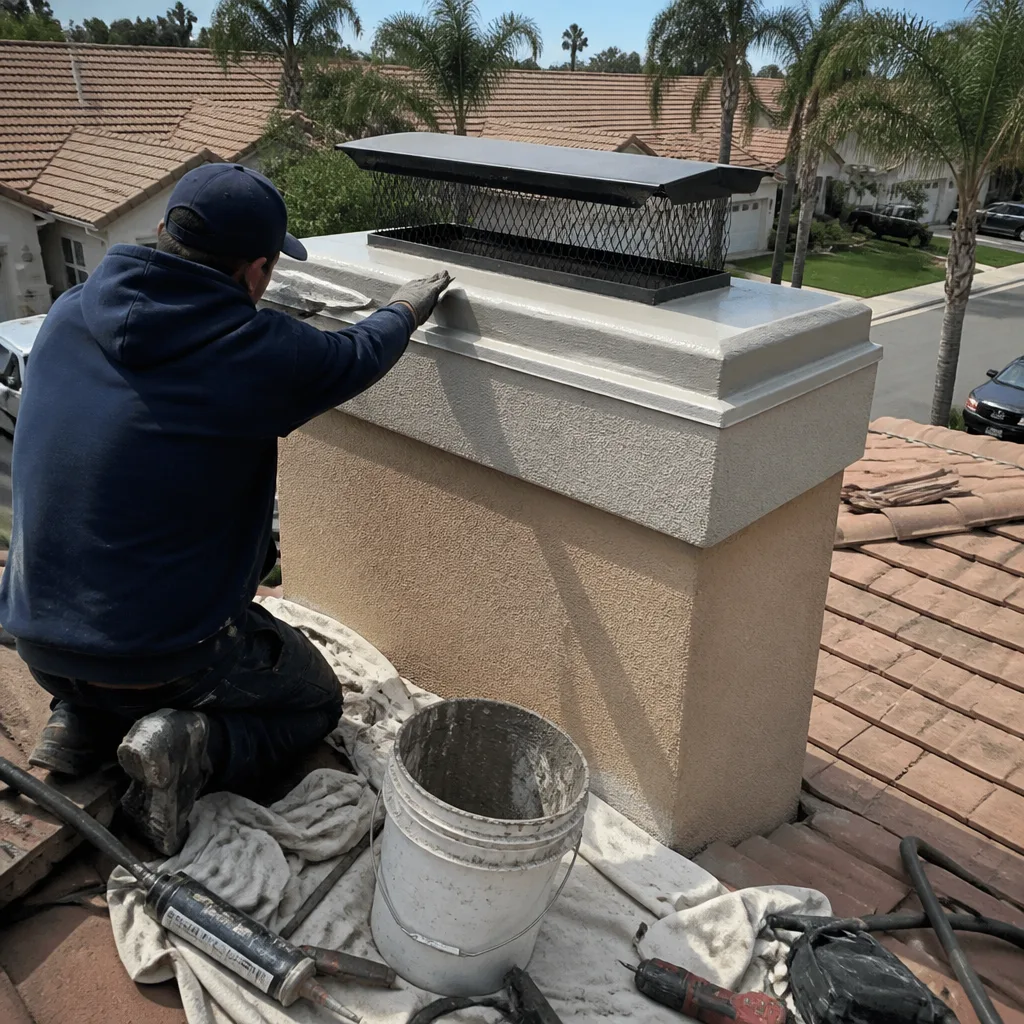
If the crown has a crack wider than a credit card edge, it’s beyond DIY sealant. The fix involves grinding out the crack, filling with a flexible polymer-modified repair compound, and re-sloping the surface if needed. A Chimney Repair in Chino professional can do that in one visit. If you let it go, you’ll be pricing a Chimney Sweep in Chino to first remove the damage and then quote liner work you never planned for.
The Cap and Liner: Your Flue’s First Line of Defense
The cap sits between the open air and your flue. Its visible function is keeping birds, leaves, and embers out. Its less visible function is maintaining correct draft. Chino’s valley winds can shift direction over the course of an afternoon, and a cap with the wrong mesh size or a partially blocked screen changes draft behavior in ways you feel as smoke spillage at startup.
Check the mesh monthly during burning season. Spark arrestor screens on caps in Chino clog faster than you’d expect, not from creosote, but from airborne dust and ash that catches on the fine wire. A clogged screen behaves like a closed damper. You’ll see smoke curling back into the room, or you’ll hear a hollow moan from the firebox when the fire is burning. If the mesh has more than 30% blockage, remove it and brush it clean with a nylon brush. Do not burn with a clogged cap.
The liner is what the cap protects. In Chino, you’ll encounter three types: clay tile in older masonry chimneys (pre-1990 homes across the old town grid), stainless steel flexible liners in newer installations and retrofits, and poured-in-place liners in some custom builds. Each fails differently. Clay liners crack from thermal shock, especially when a homeowner throws a big first fire into a cold flue with a hard wood like oak. Those cracks are not visible from the cap. They show up as white staining on exterior brick (efflorescence from moisture passing through), or as small black fan-shaped deposits on the firebox floor after burning.
Stainless liners, including the DuraFlex flexible systems we stock for Chino installs, resist cracking but accumulate creosote on the corrugations. Because the corrugations are tighter at the bottom of the liner near the firebox, that’s where buildup concentrates. A 40-burn inspection schedule with almond wood, or 50 burns with seasoned oak, is the right rhythm in Chino. If you have a gas fireplace with a stainless liner, check the cap seal annually and have the liner pressure-tested once every five years. The standard air pressure test catches pinholes that visual inspection misses.
The Damper: The Component That Lies to You
Here’s the dollar-bill test everyone knows: close the damper on a cold flue, place a dollar bill across the opening, and see if the damper pins it in place. If the bill drops, the seal is bad. But here’s what the test doesn’t tell you in Chino: the dollar-bill test was designed for cast-iron throat dampers with flat seats. It tells you nothing about the sides of the damper, nothing about the hinge pins, and nothing about the frame-to-masonry joint that surrounds the entire damper assembly.
In Chino’s dry climate, we see a particular failure pattern: the cast-iron damper plate survives, but the mortar bed it sits in develops dry shrinkage cracks. Air leaks around the damper frame, not through it. You’ll feel a cold draft near the firebox on winter mornings even when the damper is closed, and you’ll blame the damper itself, then replace it, and still have the draft. The fix is often a Famco top-sealing damper installed at the flue crown, which creates a positive seal that bypasses the old throat damper entirely. Top-sealing dampers are a strong match for Chino because they also keep hot air from escaping through the flue in summer, when air conditioning is doing the real work.
Do this once a month during burning season:
- Close the damper fully when the fire is out and the flue is cool. Leave the damper open during startup and until the fire is fully established; closing it too early sends smoke and carbon monoxide into the room.
- Run your hand around the damper frame (when cool). You should feel no air movement. Use unscented baby powder on your fingers if you need a visual: the powder will drift toward any leak path.
- Listen for a change in noise level when the damper opens and closes. A damper that moves silently or hangs at one end has a hinge pin issue.
- If you smell last night’s fire in the room the next morning, the damper is leaking. Schedule a repair before your next burn.
Chino’s warm September days are the best time to catch a failing damper seal, because the temperature differential between air-conditioned indoor air and the outdoor air is highest then. Check it in early October before you commit to a season of burning.
The Firebox and Smoke Chamber: Where Residue Hides in Plain Sight
The firebox is easy to inspect: look at the brick or refractory panels, the ash bed, and the hearth. Cracks in refractory panels wider than 1/16 inch need attention, because heat passes through those gaps and attacks the metal shell behind the panel. In Chino, many older fireboxes used fire brick rather than refractory panels. Fire brick cracks less but spalls more. You’ll see the brick face shearing off in thin layers, especially after a summer of high heat followed by rapid cooling when the evening marine layer rolls in.
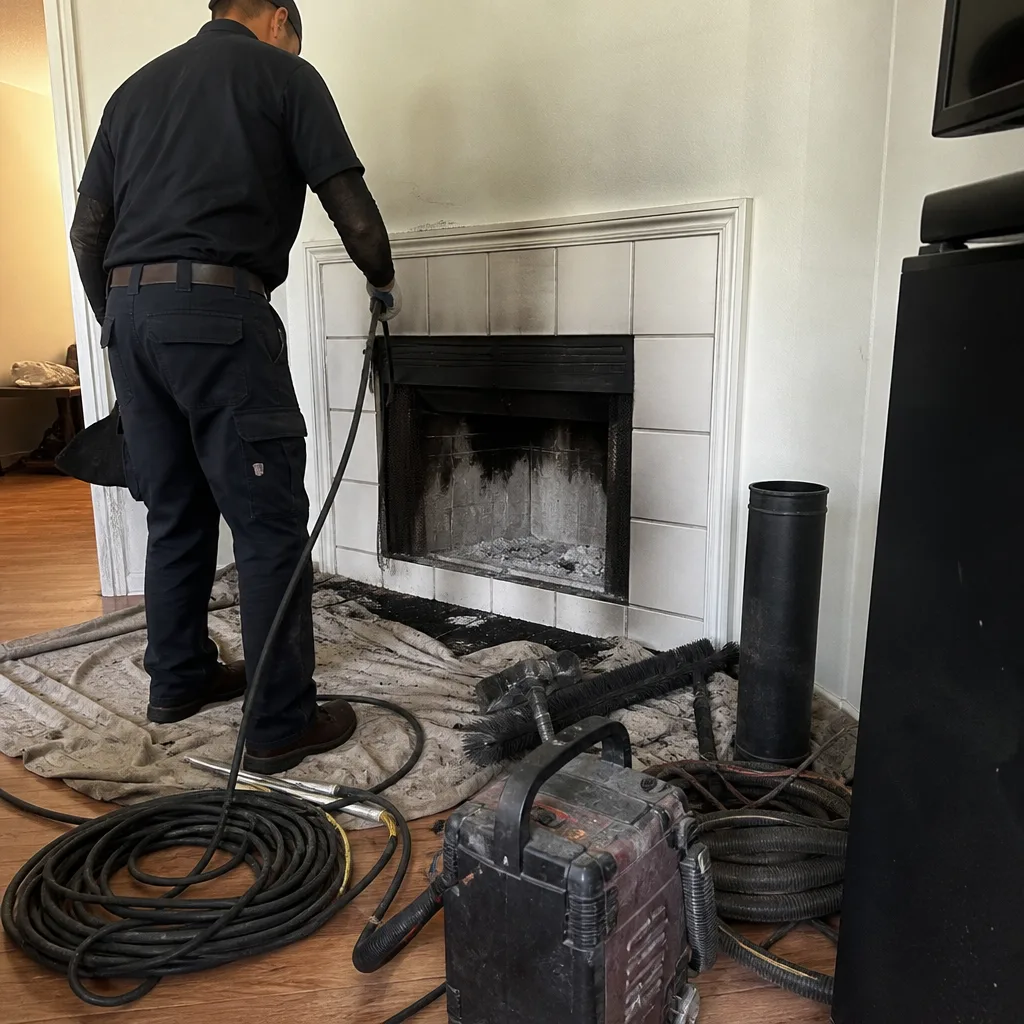
The smoke chamber, on the other hand, is the component almost no one sees without a camera. It sits between the damper and the flue, and its corbelled brick geometry was designed to funnel smoke. It also creates dozens of horizontal ledges where creosote accumulates. In Chino, we find two patterns: almond and citrus wood burners have sticky, caramel-colored deposits that cling to the chamber walls and resist brushing; oak burners have hard, shiny, dark brown glaze that requires chemical treatment or mechanical removal. Neither shows up well on a homeowner flashlight inspection, which is why Chimney Sweep in Chino service calls include a camera run through the full flue path before and after cleaning.
What you can check from below:
- Shine a bright flashlight up into the smoke chamber from the firebox with the damper open. You’ll see the first corbeled ledge. Look for shiny or sticky deposits.
- Check the firebox floor for flaky black material after a burn. That’s creosote that has dropped from the chamber, and it means buildup is reaching the point where it can shed under its own weight.
- Note any odor. Creosote smells like barbecue ash mixed with motor oil when it’s thick. A sharp, acrid smell on humid winter days is a sign of active buildup.
- If you use a gas log set, look for rust on the burner and valve. Gas combustion produces water vapor, and in a Chino flue that runs cold between uses, that water condenses on the stainless liner and drips back down. Rust on gas parts is the leading indicator.
Creosote is not just a smoke nuisance. At thicknesses above 1/8 inch, it’s a fuel source for a chimney fire. The Chino Valley’s dry air cures creosote into a more combustible state than you’d find in humid climates. This is the single strongest reason to keep to a strict 40-to-50-burn sweep interval rather than stretching it.
Pre-Season Check (October): What to Look For Before First Burn
October in Chino is when the weather turns. Daytime highs drop from the 90s into the 70s, the first Santa Ana wind events blow through, and the fireplace becomes functional furniture again. Do this check before you light anything.
- Crown and chase cover: inspect for cracks, rust, or failed sealant as described above. Make the repair call now, not in December when service calendars fill up.
- Cap and screen: Check for blockages from summer dust and any nesting material. September is blackbird and starling season in Chino’s older neighborhoods.
- Damper seal: Run the dollar-bill test and the frame-leak check. If the damper sticks, clean the seat with a wire brush and apply graphite lubricant to the hinge. Do not use spray lubricants; they attract dust and can degrade the seal.
- Wood supply: Chino’s dry climate seasons wood faster than coastal climates, but almond and citrus still need at least six months split and stacked. Wood cut in March is usually ready to burn by October. Oak needs a full year. If you’re buying wood, ask the supplier when it was cut, not when it was split.
- Smoke chamber visual: Use the flashlight check. If you see glazing, schedule a sweep now. Sweeps in Chino are booked two to three weeks ahead by mid-November.
- Smoke test: Light a rolled-up sheet of newspaper and hold it just inside the firebox with the damper open. Smoke should rise quickly. If it drifts back into the room, you have a draft problem from cold air in the flue, a clogged cap, or a damper issue.
Mid-Season Spot-Check (January) and Post-Season Documentation (March)
By January, you’ve burned for two months. The deposits have built up. This is when you catch two things: creosote accumulation from your actual burning habits, and any behavior changes in the fireplace itself. Post-season documentation in March protects you later.
January spot-check:
- Inspect the firebox floor for flaky black deposits (creosote shedding from above).
- Count your burns since October. If you’re past 40 burns with almond or citrus wood, schedule a sweep before February.
- Notice any changes in the fire’s behavior: a fire that’s suddenly harder to start, or one that smokes for the first 10 minutes and then settles. Those are early indicators of restricted draft.
- Check the exterior brick for new white staining, especially on the north side of the chimney. That’s moisture moving through the masonry.
- Check the cap screen for accumulated ash. January inversions in the Chino Valley trap particulates, and those settle on the cap.
- Photograph the crown and chase cover from the same angle every March. Add these to your phone album with dates.
- Photograph the firebox and the first ledge of the smoke chamber as best you can with a flashlight.
- Log your total burn count for the season. Note the wood species you burned most.
- Note any odor you noticed during the season and when (first rain, high-wind nights, inversion days).
- If you had a sweep done, photograph the receipt and store it with the records. Chino’s municipal code follows California state fire-safety standards, and a dated sweep receipt is your documentation of compliance.
- Inspecting the firebox and calling it done. The firebox is where you see the fire. It is not where the problems are in Chino’s climate. The crown and chase cover above the roofline are where failure starts, and they’re invisible from below. Check them every October.
- Running the dollar-bill test and trusting the result. The test only checks the damper plate-to-seat contact at the front edge. It does not check the frame-to-masonry joint, the hinge pins, or the sides. If your home is older than 20 years, treat the dollar-bill test as a first screen, not a verdict.
- Burning unseasoned almond wood the same way you’d burn oak. Almond heats fast and can feel dry even when it isn’t. Split a log and press the split face to your cheek. If it feels cool or damp, it’s not ready. Give it two more months stacked in Chino’s dry air.
- Ignoring a faint smoke smell in January. A light campfire smell on wet or foggy days is not normal. It means creosote or moisture is active somewhere in the flue. Document it. Photograph the firebox. Call a sweep in Chino before the smell becomes a stain on the ceiling.
- Waiting until the first cold snap to schedule a sweep. The third week of November in Chino is when sweep schedules hit a wall. Homeowners who call in October get their choice of dates. Homeowners who call the week before Thanksgiving wait two to three weeks.
- Using a hardware-store caulk to seal a cracked crown. Standard silicone caulk degrades under Chino’s UV within two years and does not bond well to masonry. The repair needs a polymer-modified compound designed for chimney crowns, and the slope needs to be corrected for the repair to last.
- Skipping the dryer vent while inspecting the chimney. The same households that burn wood also run dryers, and lint accumulation follows the same neglect pattern as creosote. A clogged dryer vent is a fire hazard on the other side of the house. If you’re checking one ventilation system for safety, check the Dryer Vent Cleaning in Chino one too.
March documentation:
When burning season ends, you have a 15-minute documentation task that will pay off in two ways: when you hire a sweep next October, you’ll be able to tell them exactly what the system was doing in January, not just “it seemed fine.” And if you ever file an insurance claim for chimney damage, your dated photo records establish a maintenance history that adjusters respond to.
This record is your baseline. Next October’s inspection is comparison data. A homeowner with two years of March photos catches a growing crown crack six months earlier than one relying on memory.
Wood Types in Chino: Almond, Citrus, Oak, and What Each Leaves Behind
Chino burns a different wood profile than most of the country. Almond and citrus are agricultural woods. They’re abundant in the Chino Valley and San Bernardino County orchards, they’re often free or cheap, and they burn with a clean, sweet-smelling flame. But they have a residue signature you need to understand.
Almond and citrus are dense, dense woods. They burn hot and slow. That’s good for heat output. But their resin content is higher than oak or eucalyptus, and their smoke contains fine particulates that condense into a sticky, caramel-colored creosote. This creosote is softer than the hard glaze oak produces, but it builds faster and it adheres to stainless steel corrugations more aggressively. With a DuraFlex liner, we see almond-wood homes reach sweep threshold in 40 to 45 burns. The same liner with seasoned oak runs closer to 55 to 60 burns.
Oak is the workhorse hardwood for Chino fireplaces. Its creosote forms as a hard, shiny glaze when the wood isn’t fully seasoned or when the fire burns cool. Chino’s dry air helps oak season properly, but a lot of oak sold in the area is cut that same year. If you press two oak logs together and feel moisture, or if the ends show greenish discoloration, it needs more time. Burning unseasoned oak is the fastest way to glaze a liner in Chino.
Eucalyptus, if you’re offered it cheap, is a trap. It burns extremely hot, which sounds good, but that heat spikes flue temperatures and can ignite creosote deposits that have already formed. It also produces a heavy, oily smoke. We don’t recommend eucalyptus in Chino fireplaces, period.
The wood-specific checklist item is simple: if you burn almond or citrus wood, move your sweep interval to 40 to 50 burns and tell your sweep what you burn before they arrive. The chemical treatment they use for almond-and-citrus creosote is different from what they use for oak glaze. Knowing the wood profile changes the job.
Common Mistakes to Avoid
When to Call a Professional
Call a professional when you see a crown crack wider than a credit card edge, when your damper leaks air around the frame rather than through the plate, when the smoke chamber shows glazing you can reach with a finger, or when you’ve burned 40-plus fires on almond or citrus wood since your last sweep. These are not items to defer. Chino’s dry air makes creosote more combustible, not less, and the valley’s winter rain pattern means a cracked crown is a liner problem waiting for the next storm. Chimney Sweep Chino home handles sweeping, repair, and relining with the same crew. If you’re in Chino and need an inspection or a second opinion on a quote, call (866) 321-6641 for a free estimate.
Frequently Asked Questions
A standard chimney sweep in Chino runs between $180 and $340 depending on flue height, the amount of creosote present, and whether the smoke chamber requires chemical treatment for glazed deposits. If you burn almond or citrus wood and it’s been more than 40 burns since your last cleaning, expect the higher end. Call (866) 321-6641 for an exact quote. Estimates are free, and the sweep includes a camera inspection so you see the before and after for yourself.
Under normal wood-burning conditions in Chino, sweep once per year or every 50 to 60 burns, whichever comes first. If you burn almond or citrus wood, move that interval to 40 to 50 burns. Gas fireplaces can go two to three years between sweeps, but the cap and damper should still be checked annually.
Many Chino liners that get condemned can be restored rather than replaced, using a resurfacing product like HeatShield that re-coats the existing flue without full liner replacement. You need a camera inspection to know which path applies. If a liner is cracked but structurally intact, resurfacing is often a legitimate, lower-cost fix. If the liner is spalling, detached, or the wrong size for the appliance, a DuraFlex stainless reline is the correct call. Chimney Sweep Chino installs both. We specify products by name because materials matter, and we won’t recommend a liner replacement you can’t verify with camera evidence we’ll show you on the spot. Call (866) 321-6641 for an inspection.
Creosote continues to build. In Chino’s dry air, that creosote cures into a fuel that can ignite at flue temperatures reached during a normal hot fire. A chimney fire can crack a clay liner, warp a stainless liner, and in the worst case spread to the home’s framing. If you don’t have a chimney fire, the buildup still restricts draft, which pushes carbon monoxide risk up and sends smoke into the room. The cost of a sweep is the cheapest line item on your fire-safety budget. Don’t skip it.
You can do the visual inspections in this guide. You can inspect the crown, test the damper, and check the cap screen. But when it comes to brushing a flue, the equipment and geometry work against a first-timer: you need a properly sized brush, rod sections, a way to contain the dust, and a camera to verify the result. And a chimney sweep in Chino is not just brushing. It’s measuring creosote thickness, checking liner integrity, and documenting the system. If you want to learn the inspection side, this guide is your start. For the actual cleaning, call a professional for the first season so you can watch how it’s done. Call (866) 321-6641 to schedule.
They’re separate systems with separate tools and separate failure modes. A chimney handles combustion exhaust from wood or gas. A dryer vent handles hot, humid air carrying lint particles. What they share is this: both accumulate flammable deposits over time, and both are treated as fire-safety maintenance, not cosmetic work. Chimney Sweep Chino offers dryer vent cleaning as a separate, safety-critical service using the same documentation standard we use on chimneys. If your dryer takes two cycles to dry a load, you likely have a restriction. Schedule a Dryer Vent Cleaning in Chino before the dryer’s thermal limit switch does the job for you.
The Bottom Line
Your chimney is a system of seven components, and in Chino, two of them, the crown and the chase cover, do more to determine your liner’s lifespan than any other factor. Inspect them in October, run the full pre-season checklist before the first burn, and document what you find. If you burn almond or citrus wood, cut your sweep interval to 40 to 50 burns and tell your sweep what you burn. Keep your records: dated photos of the crown, firebox, and sweep receipts. In Chino’s dry climate, creosote cures into a fuel, and a single winter rain event through a cracked crown can age a liner by a decade. The maintenance you do in October costs less than the repair bill in February.
Written by the team at Chimney Sweep Chino, serving Chino since 2011. We stock and install from six professional-grade product lines: DuraFlex, HeatShield, Gelco, Olympia Chimney, Famco, and Copperfield. Trade-grade parts. Residential prices. No middleman markup guesswork.
See the difference
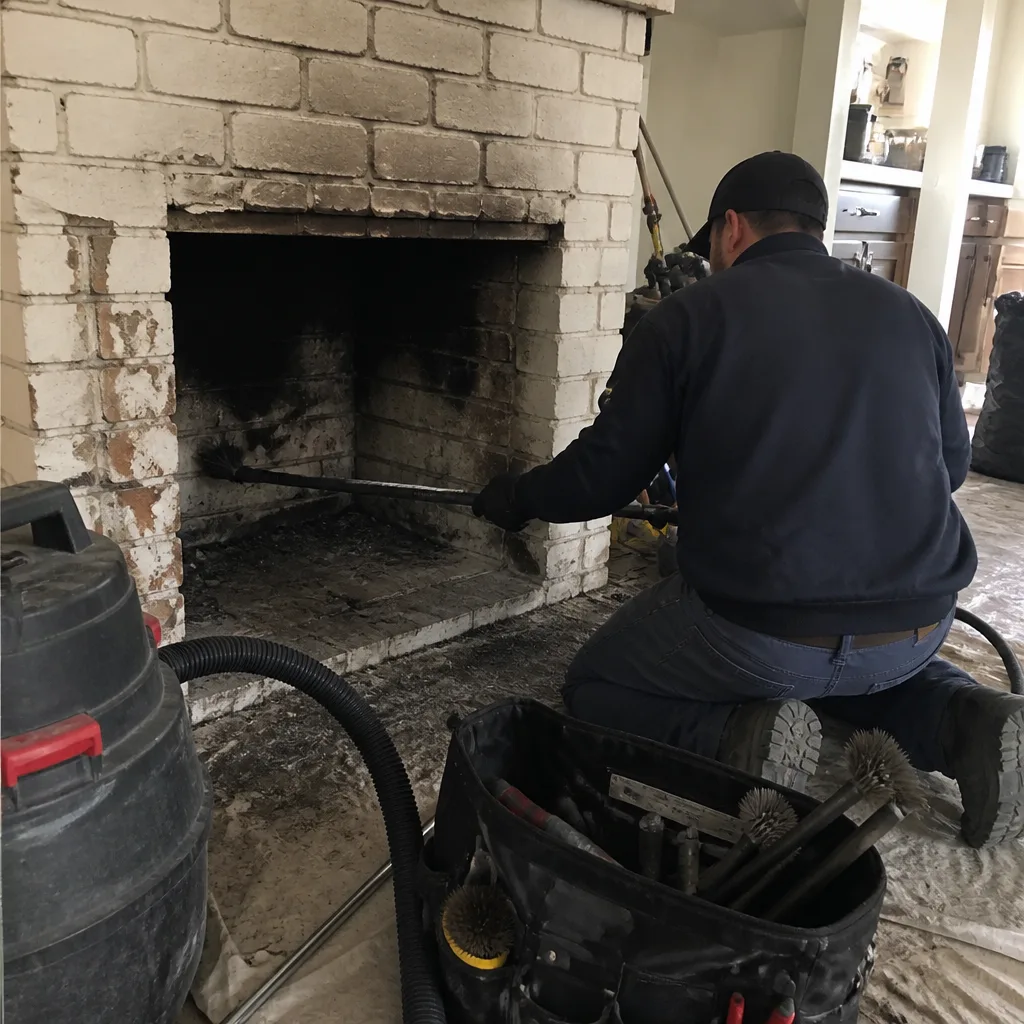 Before
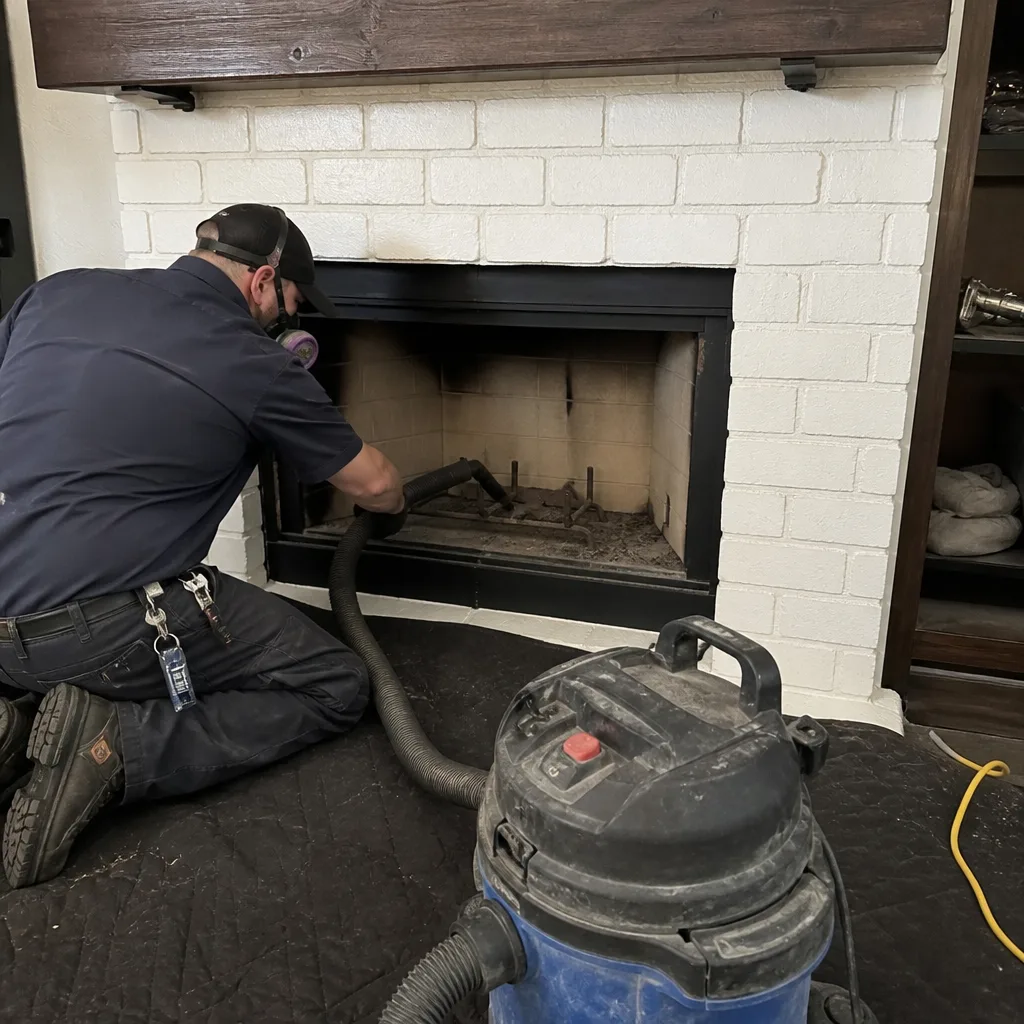 After
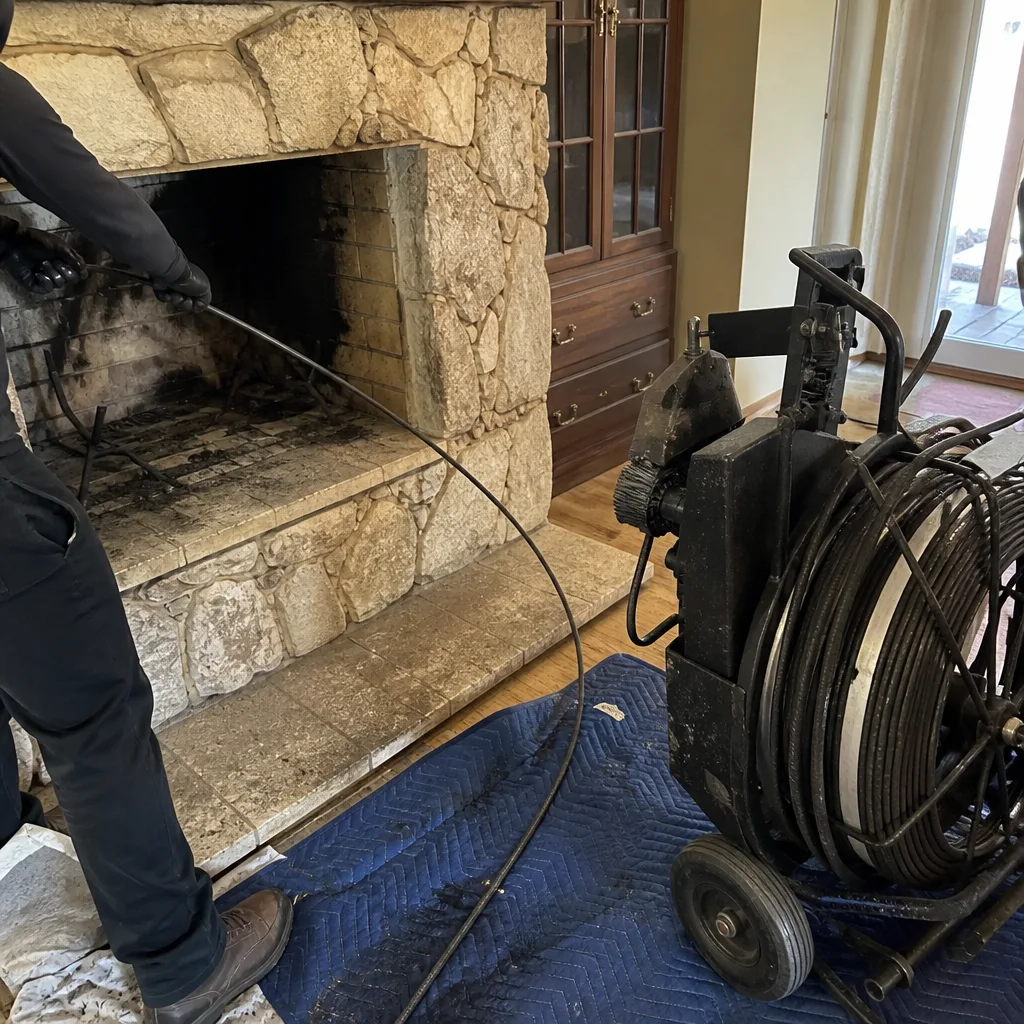 Before
 After
 Before
 After