
Last updated November 2, 2026
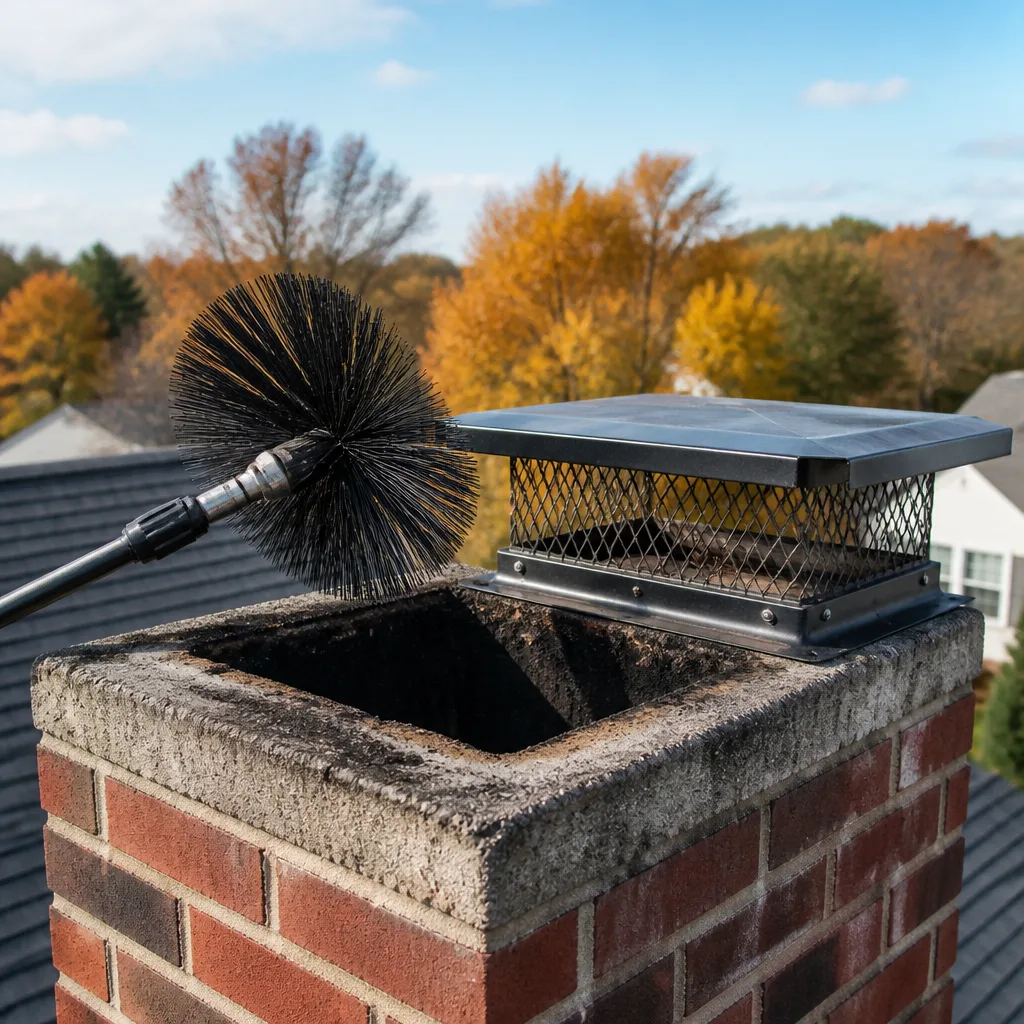 Sweep & inspection
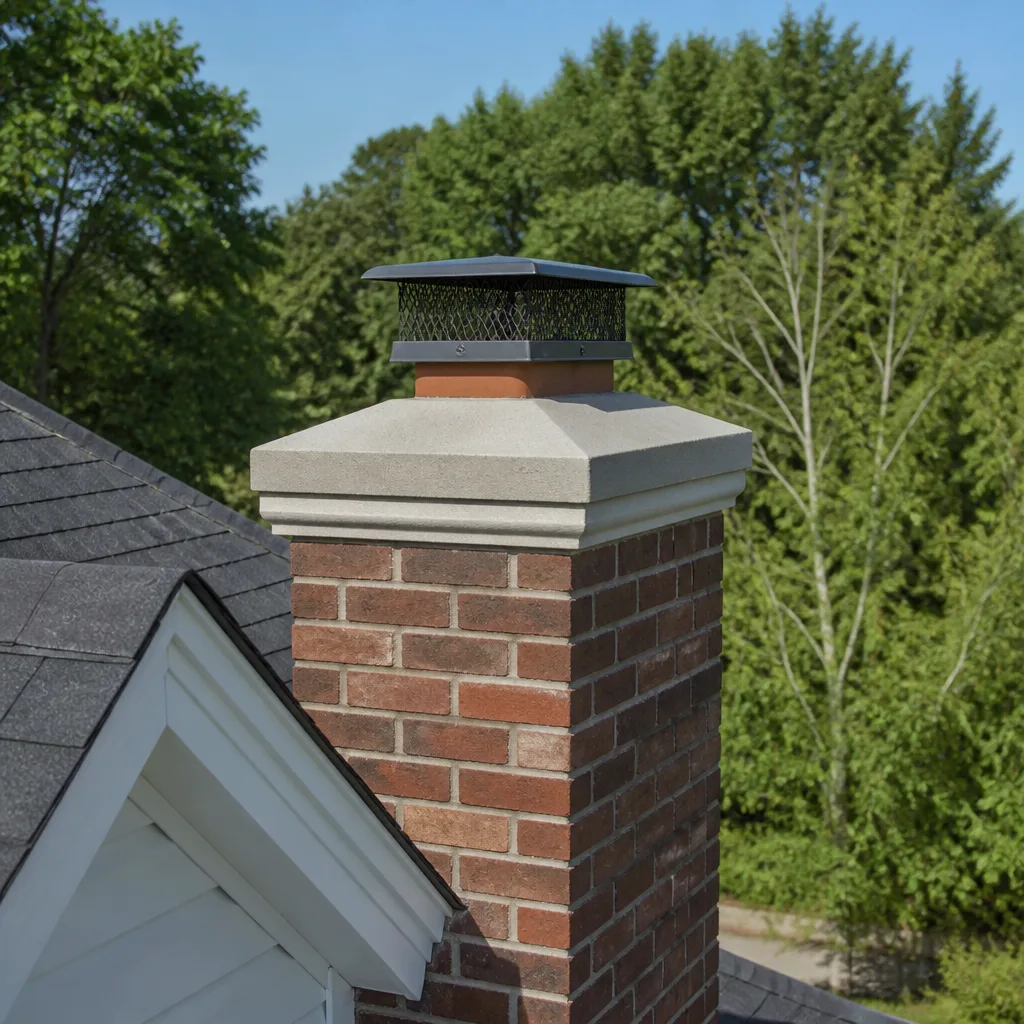 Caps & crowns
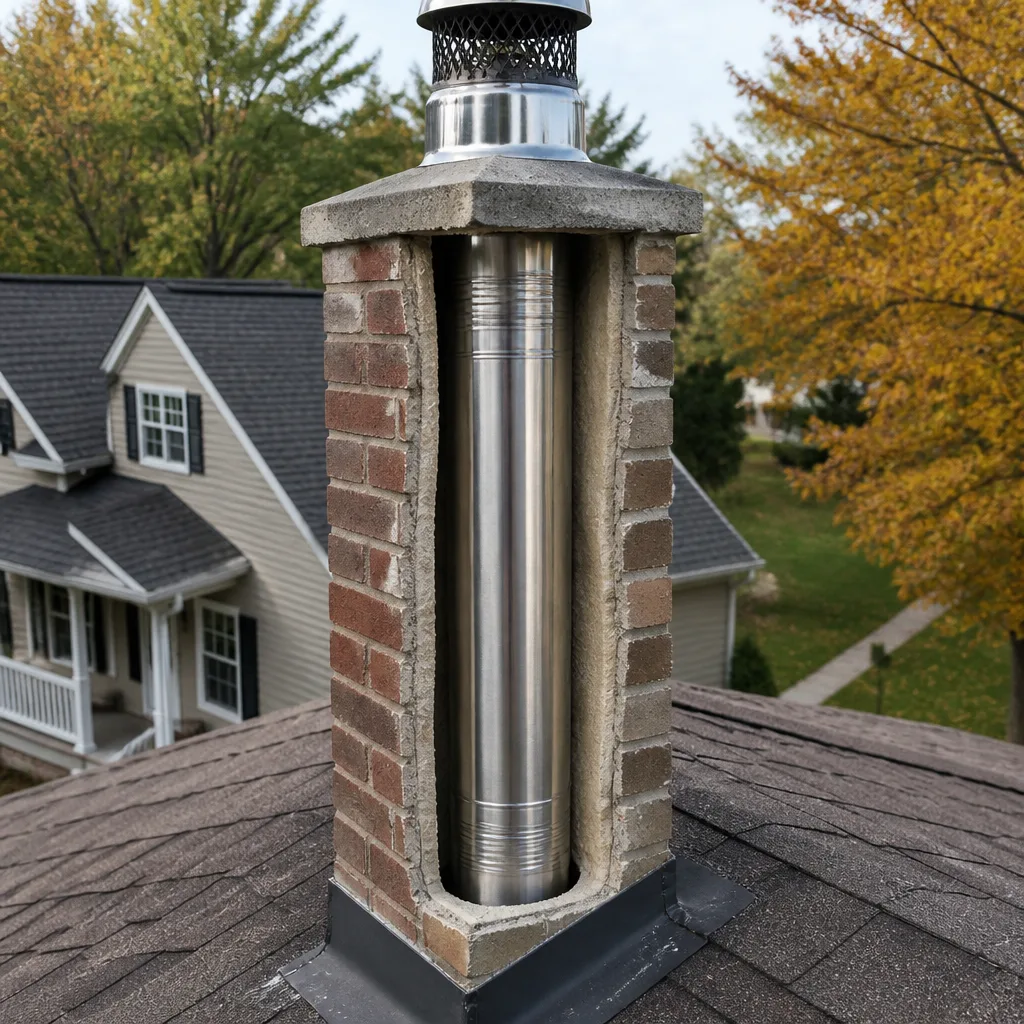 Flue relining
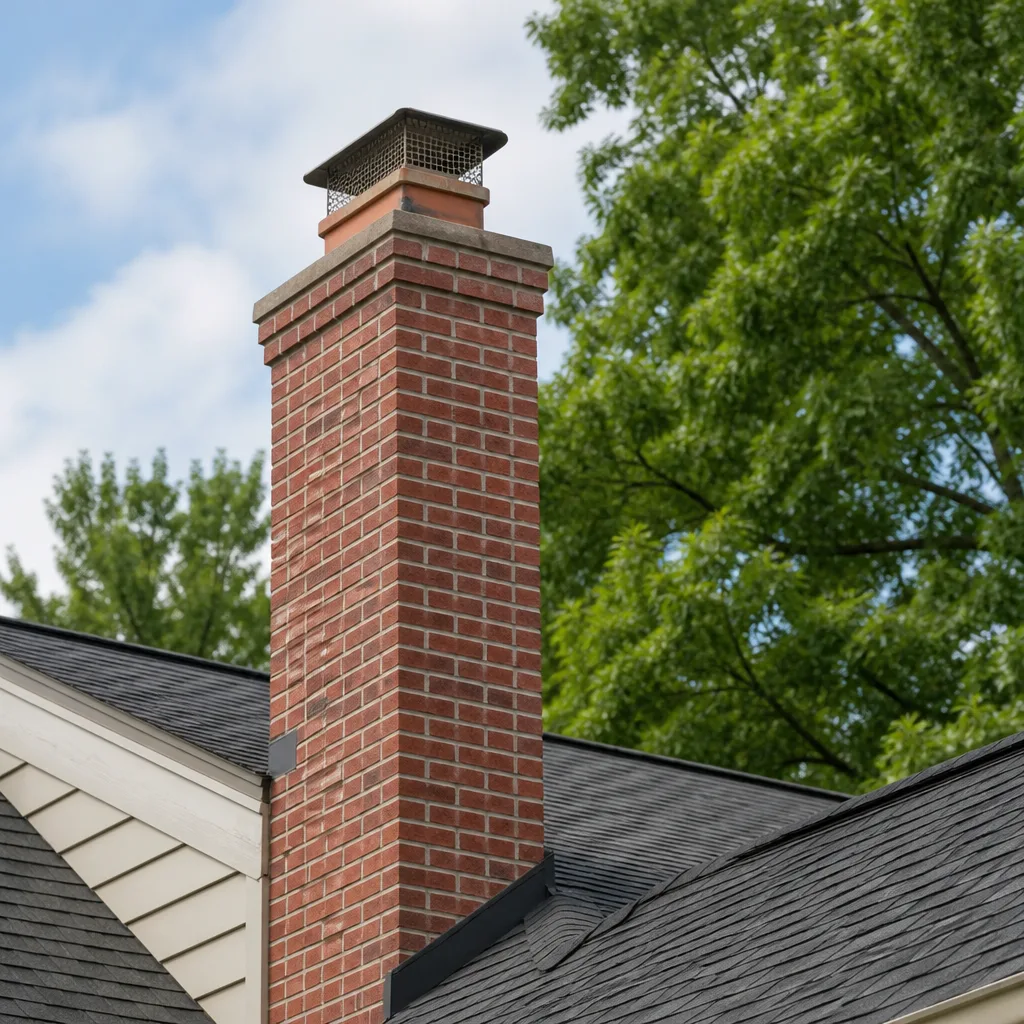 Masonry repair
 Gas fireplace service
Level 1 sweep and inspection to the NFPA 211 annual standard - flue, crown, cap, and flashing checked and photographed
Chimney sweep logs do not sweep chimneys. They loosen some creosote - which then falls where a brush and vacuum still have to collect it.
Chimney Sweep Troubleshooting: Common Problems and How to Fix Them
If smoke is rolling into your living room every time you open the damper, the instinct is to blame a dirty flue. But in a newer Chino home with tight weatherstripping, double-pane windows, and no makeup air source, a clean chimney will backdraft just as badly as a dirty one. The symptom looks identical. The fix is completely different. This guide walks through the most common chimney problems we see on chimney sweep service calls across Chino, how to read the symptoms before you pick up the phone, and which fixes are genuinely simple versus which ones need a professional. By the end, you’ll know what questions to ask, what evidence to demand, and what actually matters.
Quick Answer
Most chimney problems fall into four categories: blockage, creosote buildup, negative air pressure, or liner damage. Smoke rollout into the room usually means a draft failure from negative pressure or a cold flue, not necessarily a dirty chimney. Persistent odor in summer points to moisture interacting with creosote deposits. Before calling for a sweep, check our Complete Chimney Sweep Guide for Chino Homeowners to identify which symptom you have because the fix for each is different, and knowing the difference saves you money.
Styles & brands we work with
- Sweep & inspection
- Caps & crowns
- Flue relining
- Masonry repair
- Gas fireplace service
Table of Contents
- 1. Smoke Rollout: When Smoke Pours Into the Room
- 2. Slow Draw or Lazy Draft: When Smoke Hesitates
- 3. Chimney Odor: Why It Gets Worse in Summer
- 4. Creosote Stages: What You Can See Yourself
- 5. Sparks and Ember Escape: Flue and Cap Problems
- 6. Liner Damage: HeatShield vs. Full DuraFlex Relining
- 7. Animal and Debris Blockage
- 8. Common Mistakes to Avoid
1. Smoke Rollout: When Smoke Pours Into the Room
Smoke rollout is the most alarming chimney symptom a homeowner can face. You open the damper, light a fire, and within minutes smoke is coming into the living room instead of going up the flue. The immediate assumption is a dirty chimney. Often, that’s wrong.
In Chino, where many homes were built with increasingly tight building envelopes, the most common cause of smoke rollout is negative air pressure inside the house. Modern windows, weatherstripping, and insulation seal the home so well that when you start a fire, the chimney becomes the only available air intake. The fire pulls air down the flue instead of exhaust going up. Range hoods, bathroom fans, and even central HVAC systems running simultaneously make the problem worse by actively depressurizing the home.
Before blaming the chimney, test this. Crack a window near the fireplace about an inch. If the smoke stops rolling in and starts drawing upward within a few minutes, the issue is negative pressure, not a dirty flue. The fix is adding a makeup air source or an outside-air kit connected directly to the fireplace. This is a building science problem, not a chimney cleaning problem, and spending money on a sweep won’t solve it.
The second most common cause is a cold flue. On a cold Chino winter morning, the air inside the flue is dense and heavy. Warm smoke cannot push through that plug of cold air. You’ll notice this when the first few minutes of burning produce rollout, but the problem resolves once the flue warms up. The solution is priming the flue: hold a lit rolled-up newspaper near the open damper for 30 to 60 seconds before lighting the main fire.
The third cause is actual blockage, which we cover later in this guide. But the order matters. We’ve been called to Chino homes where homeowners had paid for multiple cleanings, only to still have smoke pouring into the room. The chimney was clean. The house was starving for air.
2. Slow Draw or Lazy Draft: When Smoke Hesitates
A slow draw is different from full rollout. Smoke is going up the chimney, but weakly. The fire burns, but the smoke lingers in the firebox, edging into the room around the glass doors or screen. The flame looks lazy, not sharp and active.
Slow draw has four primary causes, and they’re worth learning to distinguish because each points to a different fix and a different price tag. The first is creosote narrowing the flue passage. As creosote builds up on the flue walls, the effective diameter shrinks. A 12-inch flue with a quarter-inch of creosote has lost roughly 8% of its cross-sectional area. With half an inch, nearly 17%. The chimney still draws, but the reduced volume creates sluggish flow. This is a cleaning issue.
The second cause is a chimney cap that’s partially clogged with soot or debris. A screened cap is a good thing until it isn’t. Soot can compact against the mesh, especially with regular wood burning, restricting airflow at the very top of the system. We see this often in Chino neighborhoods where tumbleweeds and dry leaves accumulate on rooftops and press against caps.
The third cause is flue height or surrounding structure interference. If a neighbor’s second-story addition or a taller tree line now sits within 10 feet of your chimney top, wind turbulence can interfere with draft. This isn’t something a sweep fixes. It’s a chimney extension or a specialized cap, and it’s worth knowing before you spend money on the wrong repair.
The fourth cause is damper position or damage. A partially closed damper, a broken damper plate that doesn’t fully open, or a damper that’s warped from years of heat exposure will strangle a draft. This is a mechanical repair, not a cleaning problem. Knowing which of these four you’re dealing with determines whether you’re booking a sweep, a repair, or a chimney extension. The Chimney Sweep in Chino guide covers what a standard sweep includes and what it doesn’t.
3. Chimney Odor: Why It Gets Worse in Summer
Chimney odor in summer is one of the most common complaints we hear from Chino homeowners. The fireplace hasn’t been used in months, but the living room smells like a damp campfire. The smell intensifies on humid days, which in Southern California means late summer, especially during monsoon season when humidity spikes.
The smell is caused by creosote absorbing moisture from the air. Creosote is hygroscopic, meaning it pulls water vapor out of humid air. When creosote gets damp, it releases volatile organic compounds that smell exactly like smoke. The hotter and more humid the Chino summer, the stronger the smell. This is not a sign that your chimney needs cleaning necessarily, although buildup makes the smell significantly worse. It’s a moisture and creosote interaction problem.
A clean chimney does not smell. If you’re smelling smoke odor in summer, you have enough creosote to matter, or you have a moisture intrusion issue: a cracked crown, a missing or damaged cap letting rain in, or flashing leaks around the roofline. Water accelerates creosote degradation and makes the odor worse. In Chino’s dry climate, homeowners often assume chimney moisture isn’t a concern. But a single rain season with a cracked crown is enough to saturate a creosote layer and trigger months of odor.
The fix starts with a visual inspection of the crown, cap, and flashing. If those are sound, the odor is coming from creosote load inside the flue, and a mechanical sweep is the answer. Some homeowners try to mask the smell with chimney deodorant sprays or baking soda. Those are temporary. The creosote is still there, still absorbing moisture, and still off-gassing. The only permanent fix is physical removal of the deposits.
4. Creosote Stages: What You Can See Yourself
Creosote isn’t one substance. It’s a spectrum, and the stage of creosote you have determines how it should be removed and what it means for your fire safety. You can identify the stages yourself with a flashlight and a look up the flue from the firebox, or from the top if you’re comfortable on the roof. We don’t recommend climbing onto a roof unless you know what you’re doing, but a look from inside is safe for most homeowners.
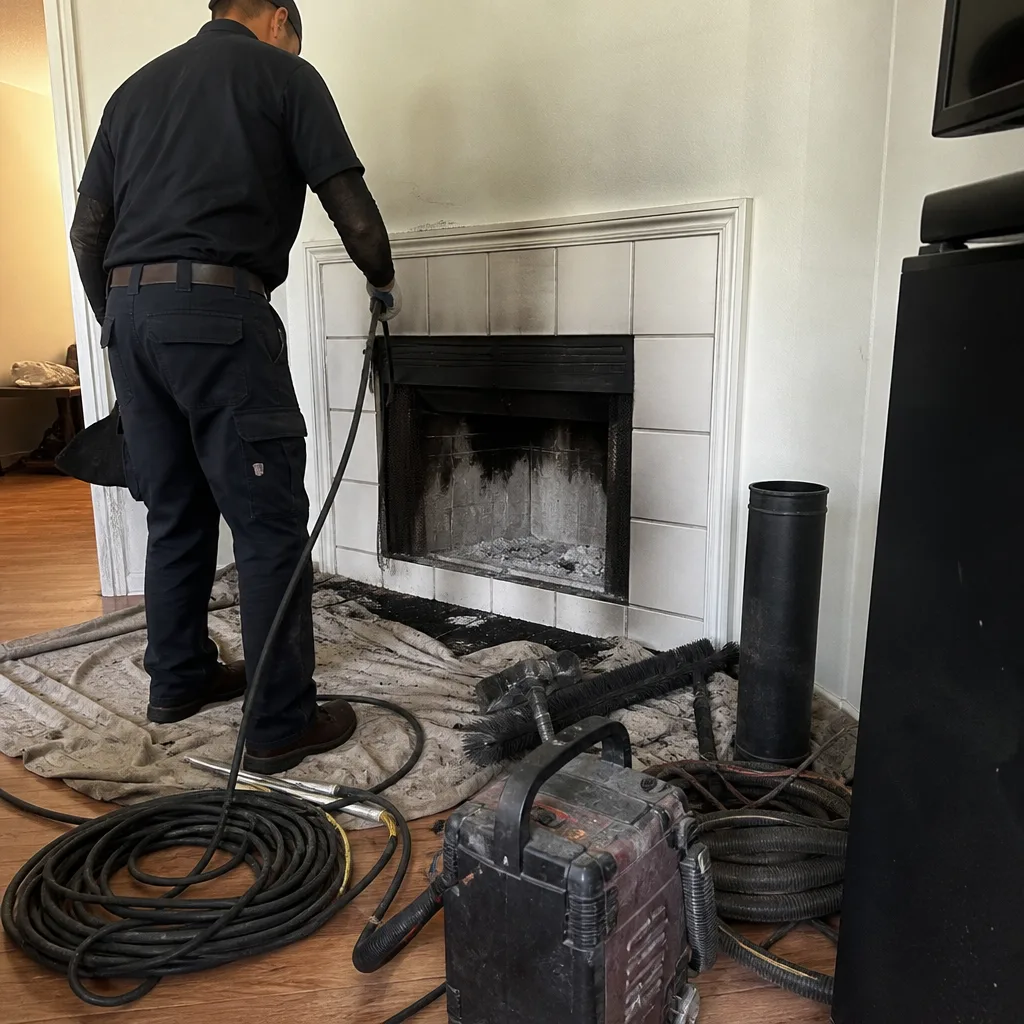
Stage 1 creosote is a fine, gray, powdery soot. It brushes off easily with a standard chimney sweep brush. This is what accumulates from regular, hot-burning fires with dry wood. It’s normal and expected. Stage 1 creosote is not an emergency, but it should be swept annually before it becomes something worse. Most Chino homeowners with well-seasoned oak or almond firewood will see Stage 1 buildup after a full burning season.
Stage 2 creosote is different. It looks like shiny, black flakes or scales stuck to the flue walls. It’s harder, more compact, and it’s the result of cooler flue temperatures, which happen when fires are damped down, burned low and slow, or built with unseasoned wood. Stage 2 resists a standard brush sweep. It typically requires rotary cleaning with poly or metal whip heads. This is where most chimney fires start, because Stage 2 is combustible and can ignite at flue temperatures that build during a hot burn.
Stage 3 creosote is a dense, tar-like glaze. It looks like shiny black glass coating the inside of the flue. It forms when creosote has been repeatedly heated and cooled, or when a chimney fire has partially occurred without the homeowner ever realizing it. Stage 3 does not come off with a brush. It requires chemical treatment, often in combination with mechanical abrasion, and in severe cases it permanently damages the flue liner. A flue with heavy Stage 3 glazing is a candidate for liner evaluation, not just cleaning.
Here is what each stage means for you as a homeowner:
- Stage 1: Normal soot. Annual sweep resolves it. Low fire risk. Typical maintenance.
- Stage 2: Hard flaky creosote. Needs rotary cleaning. Moderate fire risk. Caused by smoldering fires or green wood.
- Stage 3: Glazed tar. Needs chemical + mechanical treatment. High fire risk. Liner may be compromised.
The visual distinction matters because it tells you whether you’re looking at a routine maintenance call or a fire-safety intervention. A reputable chimney company should be able to show you these deposits during the service, ideally with a camera inspection so you’re seeing exactly what they’re seeing.
5. Sparks and Ember Escape: Flue and Cap Problems
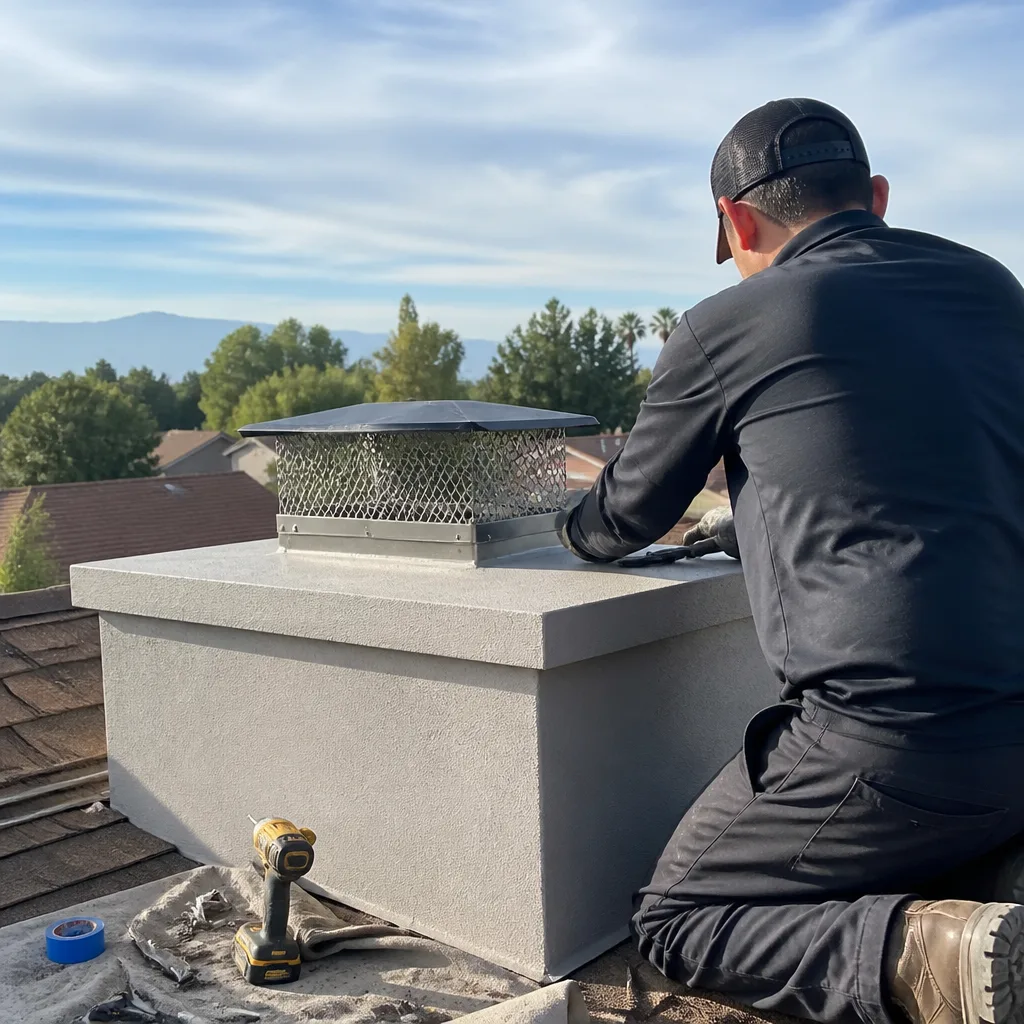
When you see sparks or embers escaping from the top of your chimney, the problem is almost always a missing or damaged spark arrestor. The spark arrestor is the fine mesh screen built into most chimney caps. Its job is to catch embers before they exit the flue and land on your roof or your neighbor’s roof. In Chino, where the wildfire risk season runs long and dry, a missing spark arrestor is not a cosmetic issue. It’s a fire hazard.
A damged spark arrestor can happen from rust, from a tree branch hitting the cap, or from a bird or rodent chewing through it. When the mesh is compromised, embers pass through during a normal burn. Those embers can land on dry shake roofing, on dry brush, or get carried on wind into a neighbor’s yard. In a region where Santa Ana winds create rapid fire spread conditions, the consequences are not theoretical.
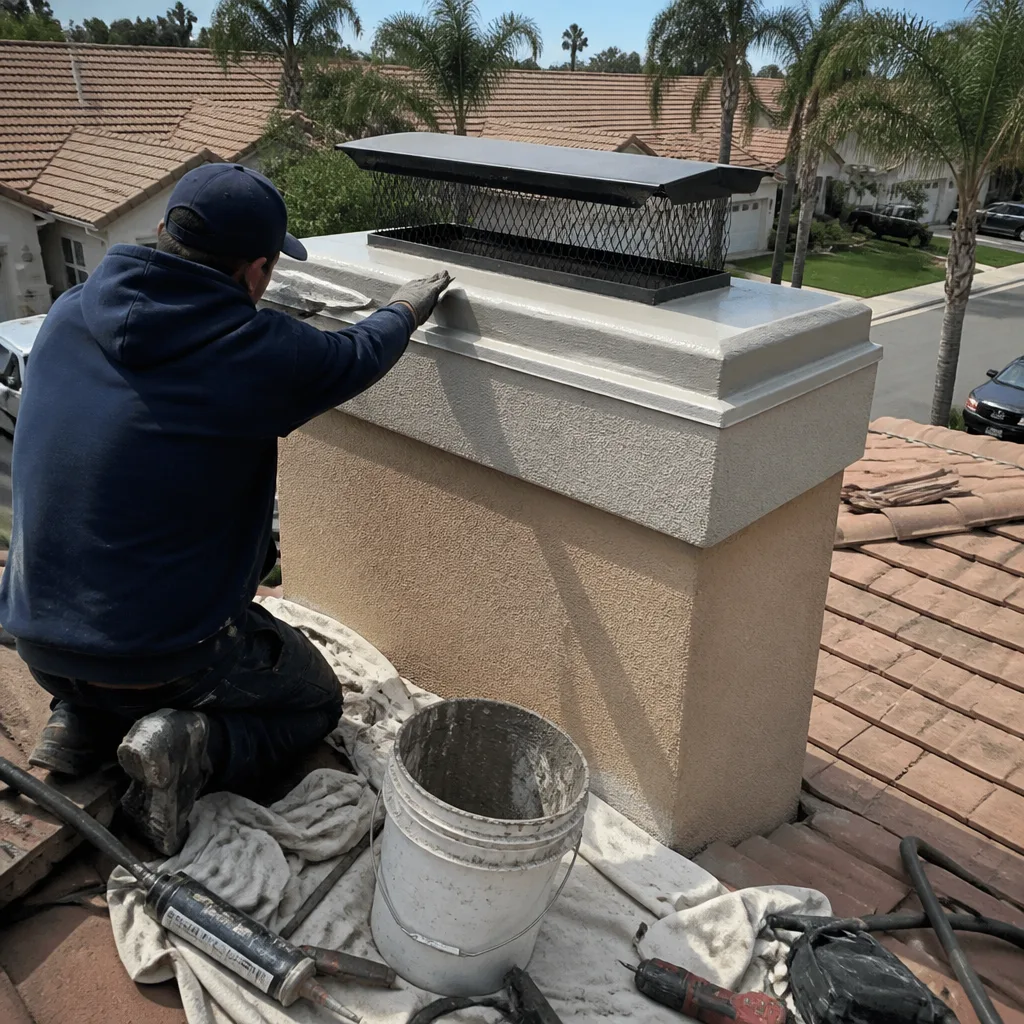
The fix is cap replacement, and here is where materials matter. Cheap caps from a hardware store use thin-gauge mesh that rusts within two to three seasons. The caps we install come from Copperfield and Olympia Chimney supply lines, the same manufacturers professional chimney contractors across the country use. A cap should be made of stainless steel or copper, not galvanized steel that degrades quickly in Southern California’s sun and occasional heavy rain. The cap should also be sized correctly for the flue: too small and it restricts draft, too large and it doesn’t seal properly.
If sparks are escaping not from the top but into the room through the fireplace opening, that’s a different problem. Glass doors that don’t seal, a missing fire screen, or burning softwoods that pop and throw embers all contribute. This is a fuel and fireplace-accessory issue, not a chimney issue. But the fix is straightforward: burn properly seasoned hardwood, keep a fire screen closed, and replace glass door gaskets that have flattened from heat cycles.
6. Liner Damage: HeatShield vs. Full DuraFlex Relining
When a chimney professional tells you the flue liner is damaged, you need to understand the threshold between a repair and a replacement. This is where homeowners get taken advantage of. Not every cracked liner means a full relining job. And not every surface repair is appropriate for every type of damage.
The flue liner is the protective barrier between the inside of your chimney and the masonry around it. When it fails, heat and combustion gases can escape into the chimney structure, and eventually into the house. In Chino homes built between the 1960s and 1990s, clay tile liners were standard, and they fail in predictable ways: cracked tiles from chimney fires, missing mortar joints from water damage, or spalling from repeated thermal expansion. The question is whether the liner has structural integrity left.
HeatShield Cerfractory Flue Liner Resurfacer is a product line designed for exactly this situation. It’s a ceramic repair system that restores the inner surface of a damaged clay tile liner without removing the old one. A specially formulated compound is applied to the flue walls, filling cracks and gaps, sealing the liner into a continuous surface. HeatShield is appropriate when the original liner is still mostly intact but has minor cracking, spalling at the surface, or joint damage. It’s a fraction of the cost of a full relining, and when the underlying structure is sound, it’s the right repair, not a compromise.
A full DuraFlex relining is a different scope of work. DuraFlex is a flexible stainless steel liner system that’s installed inside the existing flue cavity, creating a new flue from top to bottom. It’s the answer when the original clay liner is structurally failed, when the flue has multiple collapsed sections, when you’re converting from a wood-burning to a gas appliance, or when a chimney fire has damaged the clay beyond surface repair. DuraFlex is not the cheaper option, but in these scenarios it’s the only correct one.
The threshold condition is this: if the existing liner has structural continuity and the damage is surface-level, HeatShield is typically the right call. If the liner is cracked through, collapsed, or absent in sections, no surface resurfacing will hold. You’re building on a failed foundation. We specify products by name because materials matter, and because knowing the difference between HeatShield and DuraFlex means you won’t be talked into a $4,000 relining when a $1,200 resurfacing would have done the job safely, or into a patch job when what you need is a full liner. The Chimney Repair in Chino page covers our repair assessment process in detail.
If you’re in this situation, ask for a camera inspection. Any reputable chimney company should provide one. Do not agree to a liner replacement based on a verbal description. You should be shown the damage, on video, before any recommendation is made.
7. Animal and Debris Blockage
Chino sits in a region with active bird, squirrel, and raccoon populations, and chimneys without properly fitted caps are an open invitation. Animals build nests in flues. The nest blocks the draft, creating smoke rollout and slow draw. But more than that, nesting material is highly flammable, and it’s often wedged against the flue walls where it creates a serious chimney fire risk the first time the fireplace is used.
Here is what to look for if you suspect an animal or debris blockage:
- Smell: A foul, organic odor coming from the fireplace when the damper is open, often worse on warm days.
- Sound: Scratching, chirping, or rustling sounds coming from inside the chimney, especially in the early morning or evening.
- Visual: Nesting material visible at the top of the flue, or twigs and leaves accumulating in the firebox.
- Draft: The chimney draws poorly even though the fireplace was working fine the previous season.
If you confirm an animal is in the chimney, do not attempt to smoke it out. That creates a fire hazard and often kills the animal, which then creates a much worse problem. Close the damper and call a professional chimney company that handles animal removal as part of their service. The process involves removing the nest, sweeping the flue thoroughly to remove all nesting material, and then upgrading the cap to prevent re-entry.
The cap upgrade is crucial. A basic screen cap is not sufficient for squirrels or raccoons, which can chew through thin mesh or pry it loose. The cap should be heavy-duty stainless steel with reinforced mesh and a secure mounting system. This is the difference between a one-time removal and an annual service call for the same problem. In our experience, Chino homeowners who skip the upgraded cap after an animal incident are back on the phone within a year, sometimes with the same animal.
For homes in Chino with wood-burning fireplaces that haven’t been used in years, pre-season inspection should always include a visual check of the cap and flue top. Debris accumulates quickly in this climate, and a blocked flue on a cold night is not when you want to discover it.
Common Mistakes to Avoid
We’ve seen the same errors repeated across hundreds of Chino service calls. Most of them come from well-meaning homeowners trying to solve a chimney problem with partial information. Here are the ones that cost the most money and create the most frustration:
- Burning unseasoned wood. Green wood creates cool, smoky fires that deposit creosote at an accelerated rate. In Chino, where oak and almond are common, the wood needs at least 12 months of drying time. Burn green wood for one season and you’ll have Stage 2 creosote for sure. Seasoned firewood is the single cheapest chimney maintenance tool you have.
- Closing the damper too early. After a fire, the embers are still producing combustion gases for several hours. Closing the damper traps those gases in the flue, where they cool and condense as creosote. Leave the damper open until the firebox is completely cold to the touch, or close it to within an inch for that period.
- Hiring a low-cost sweep without a camera inspection. A brush sweep removes surface soot but tells you nothing about the condition of the liner, the cap, the crown, or the flue joint. In Chino’s competitive market, it’s tempting to go with the cheapest quote. When something is missed on that quote, the next repair is always more expensive than it would have been with early detection.
- Ignoring slow-draw symptoms for a season. A chimney that draws poorly creates more creosote, which makes it draw worse. It’s a compounding problem. By the time the smoke is consistently rolling into the room, the creosote load has worsened and the fire risk has increased.
- Adding a fireplace insert without relining the flue. An insert changes the temperature profile of the flue. The existing clay liner was sized for an open fireplace, not an enclosed appliance. This creates condensation and creosote problems, and in some cases structural damage to the chimney. Modern installations require a stainless liner, typically a DuraFlex system, regardless of what the existing clay looks like.
- Assuming a chimney that isn’t used doesn’t need maintenance. Unused chimneys still get moisture intrusion, animal infestation, and debris accumulation. A chimney that’s been idle for five years needs an inspection before first use, not after.
- Mistaking a smoke smell for a fire. Smoke odor in summer is a creosote and moisture issue, not a sign of burning. But it does indicate a creosote load worth addressing. Ignoring it means the creosote is still there when you do finally burn, and now it’s been absorbing moisture for months.
See the difference
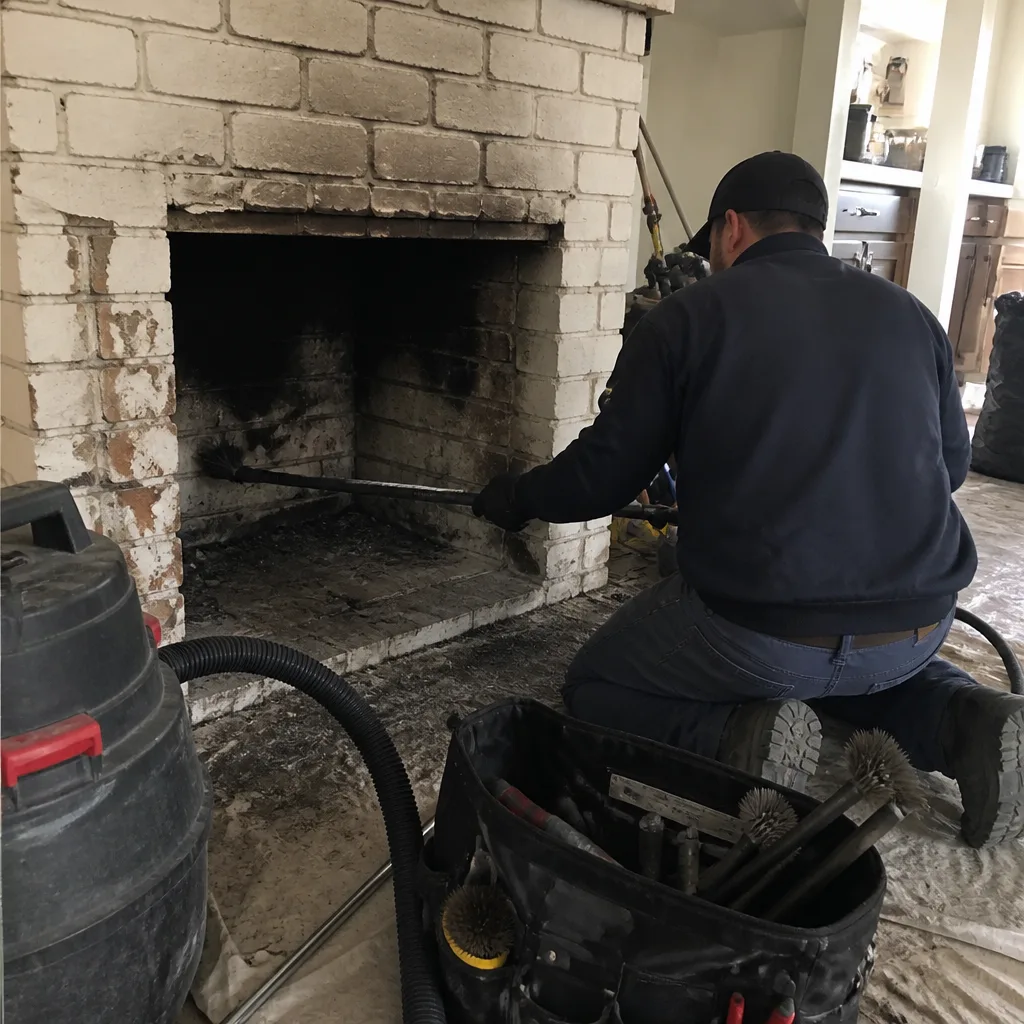 Before
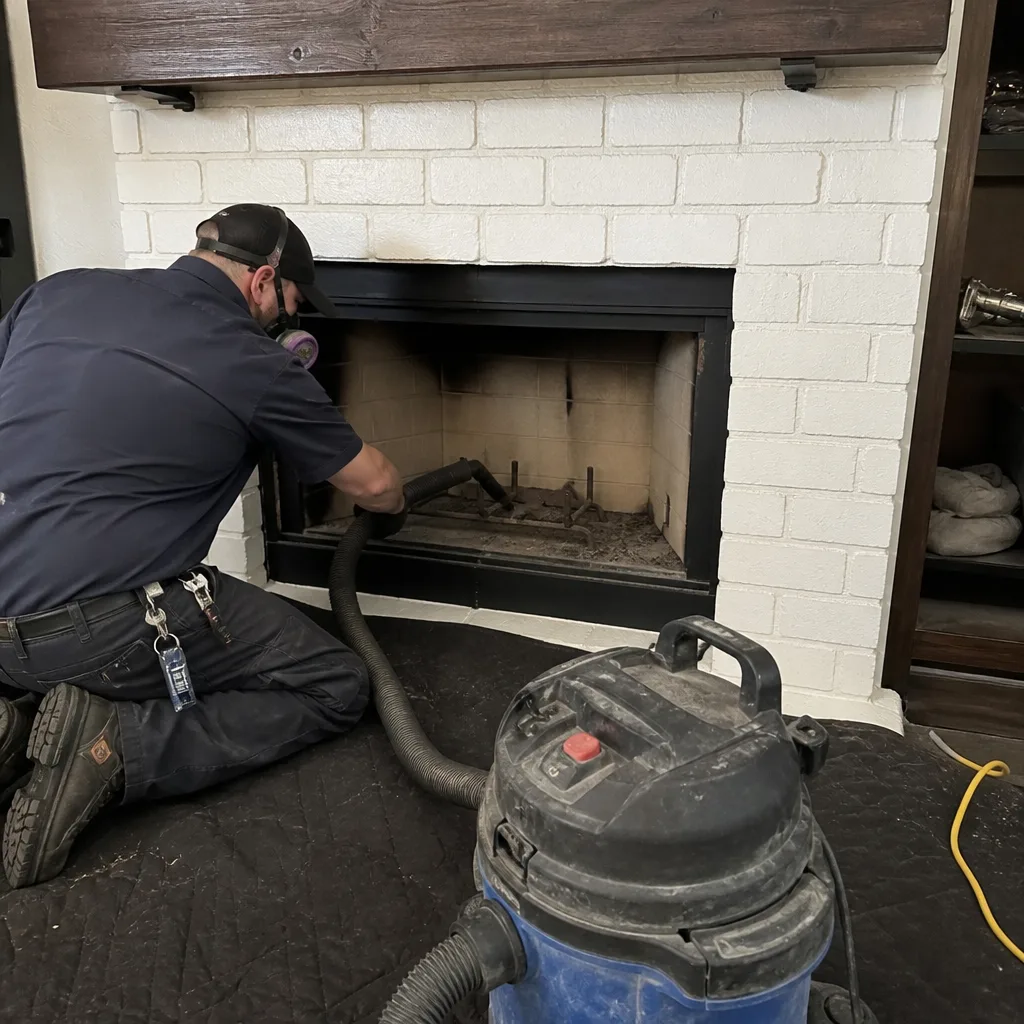 After
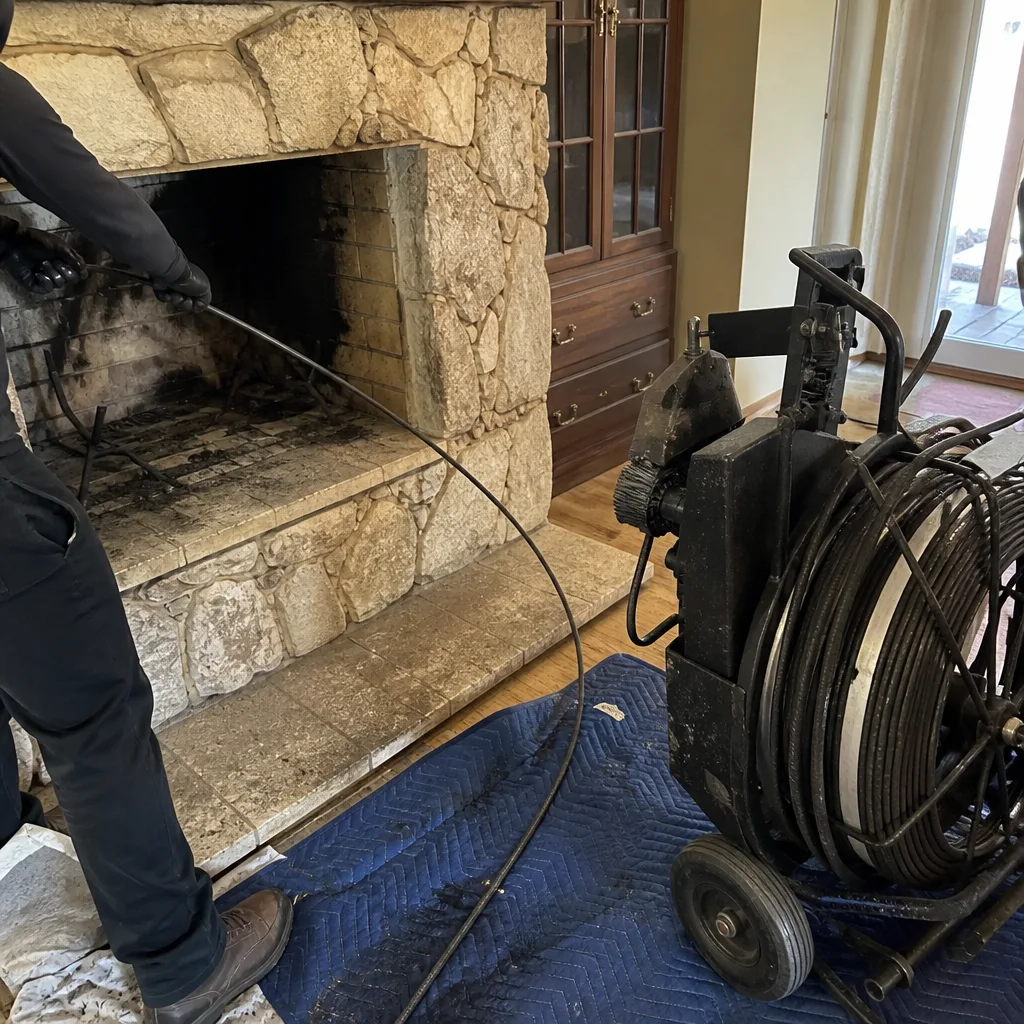 Before
 After
 Before
 After
When to Call a Professional
Some chimney problems are visible and diagnosable from the ground. Others require a professional inspection. Call a chimney specialist when you see any of the following: smoke rollout that doesn’t resolve with a cracked window and flue priming, Stage 2 or Stage 3 creosote visible on the flue walls, spark or ember escape from the chimney top, animal sounds or nesting material in the flue, or any sign of liner damage (falling clay tile pieces, white staining on the exterior masonry, or visible cracks in the crown). For help choosing the right chimney cleaning brand in Chino, see our buyer’s guide. If you’ve had a chimney fire, even a small one you caught quickly, the flue needs to be inspected before the next burn. Chimney Sweep Chino offers free estimates in Chino. Call (866) 321-6641 and we’ll assess what’s actually happening, with camera evidence, before recommending any work.
Frequently Asked Questions
A standard chimney sweep in Chino typically runs between $150 and $300 depending on the flue condition, the height of the chimney, and whether the creosote has reached Stage 2 or Stage 3, which requires more intensive mechanical or chemical treatment. If the chimney has animal nesting, significant Stage 3 glaze, or needs a liner evaluation, the scope expands and so does the price. Call (866) 321-6641 for an exact quote. Estimates are free.
The National Fire Protection Association standard is that chimneys should be inspected at least once a year and swept when creosote buildup reaches one-eighth of an inch or more. For homeowners burning wood weekly during the Chino winter season, an annual sweep before the first fire is the right routine. If you burn more than three cords per season or burn softwoods occasionally, you may need a mid-season check.
Only if the existing liner has failed structurally. Surface cracking and spalling can often be addressed with a HeatShield Cerfractory resurfacing, which restores the liner surface at a lower cost than full replacement. A full DuraFlex relining is needed when the original liner is collapsed, cracked through in multiple sections, or when an appliance installation requires a different flue diameter. Before agreeing to any liner work, request a camera inspection and see the damage yourself. Nothing should be recommended without visual evidence.
Creosote accumulates with every fire. At Stage 1, it’s a routine maintenance issue. At Stage 2, it becomes a legitimate fire hazard, because the hard, shiny flakes are concentrated fuel waiting for a hot enough flue temperature. At Stage 3, the flue is glazed with a tar-like layer that can ignite and burn at over 2,000 degrees Fahrenheit. A chimney fire at that temperature damages the liner, the masonry, and can spread to the roof structure. Skipping a sweep for a year usually means moving from Stage 1 to Stage 2. Skipping multiple years is how Stage 3 happens without a warning. Call (866) 321-6641 if you’re overdue, and we’ll assess the actual condition before any work is recommended. For more guides & resources, visit our blog.
Creosote in the flue absorbs moisture from humid air and releases smoky-smelling compounds. The hotter and more humid the Chino summer day, the stronger the smell. If the smell is present, there’s creosote in the flue worth removing, or there’s a moisture entry point like a cracked crown or damaged cap that’s wetting the creosote and making it off-gas. A clean, properly capped chimney should not smell at all.
You can brush Stage 1 soot if you have the equipment and can safely access the chimney top. But a DIY cleaning tells you nothing about liner condition, crown integrity, cap function, or hidden creosote pockets. Without a camera, you cannot see the inside of the flue, and that’s where the fire risk lives. We recommend doing an annual professional inspection and sweep, and if you choose to do basic maintenance between sweeps, use that time to visually inspect what you can from the firebox. For anything beyond Stage 1 soot, or if you have any doubt about the condition of your liner, call a professional. The Dryer Vent Cleaning in Chino service addresses a related ventilation fire hazard that many Chino homes have never had inspected.
The Bottom Line
Chimney problems are diagnosable. Smoke rollout, slow draw, odor, and sparks each point to a different root cause, and the fix for a draft problem caused by negative pressure is not the same as the fix for a flue obstruction. Learning to read those symptoms before calling for service means you’ll know what questions to ask, what evidence to demand, and when a repair recommendation is legitimate versus unnecessary. In Chino, with our hot summers, occasional heavy rains, and long wildfire season, chimney maintenance is fire-safety work. The stakes are not cosmetic. If you’re seeing any of the symptoms described in this guide, start with a camera inspection and a professional assessment. Chimney Sweep Chino home page has more on our service area and approach.
Written by the team at Chimney Sweep Chino, serving Chino since 2011.