
DuraFlex Chimney Sweep in Chino: A Homeowner’s Guide
A DuraFlex liner is a corrugated stainless steel tube built from 316Ti alloy, manufactured to the UL 1777 standard, and installed inside your existing chimney flue to create a new, code-compliant venting path. In Chino, where many homes date to the 1980s and 1990s with original clay tile liners now cracking and spalling, a DuraFlex relining often determines whether a chimney is safe to use at all this winter. Standard sweeping removes creosote and soot from the surface of the flue, but if the flue itself has failed, no amount of sweeping restores it to a safe condition. If you’d rather not sort through liner specs on your own, call (866) 321-6641 and we’ll walk you through what your chimney actually needs.
What DuraFlex Actually Is, and Why the Alloy Grade Matters
DuraFlex is a flexible stainless steel chimney liner manufactured by DuraVent, one of the most specified venting brands in North America. The version used for residential relining is made from 316Ti, a titanium-stabilized austenitic stainless steel. The titanium addition does something specific: it prevents carbide precipitation at high temperatures, which is the metallurgical failure mode that causes ordinary stainless to degrade and crack after repeated heating cycles. For a wood-burning fireplace in Chino that sees fires every weekend from November through February, that difference matters.
The 316Ti grade also resists the acidic condensate produced by high-efficiency gas appliances. That’s why a liner specified for a wood stove isn’t automatically right for a gas insert. DuraFlex comes in different grades and configurations, and the liner’s diameter, wall thickness, and alloy composition must match the appliance type and BTU output. This is not a one-size-fits-all product, and unlike PVC venting or budget aluminum liners, DuraFlex is built for sustained flue gas temperatures up to 1000°F continuous and 1400°F intermittent.
- 316Ti alloy: Titanium-stabilized for resistance to high-temperature corrosion and acidic gas condensate.
- UL 1777 listed: Tested and certified specifically for use as a chimney liner, not a general-purpose vent pipe.
- Corrugated profile: Allows flexibility for offset flues and easier installation through existing masonry without major demolition.
- Multiple diameters: Sized to match the appliance’s exhaust volume, which prevents condensation and draft failure from an oversize flue.
We specify DuraFlex by name because materials matter. When a homeowner in Chino asks why one quote for a stainless liner is $1,800 and another is $4,200, the answer usually comes down to whether the contractor is sourcing a UL-listed 316Ti system or an unbranded corrugated pipe that looks similar on a shelf.
Sweeping vs. Relining: How to Know Which One You Actually Need
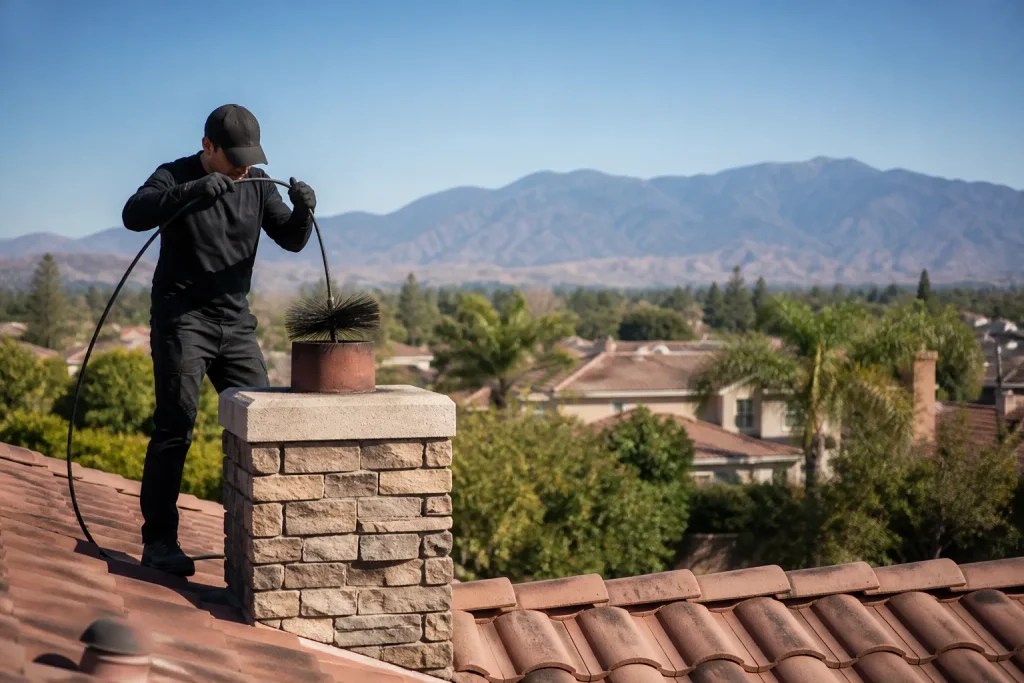
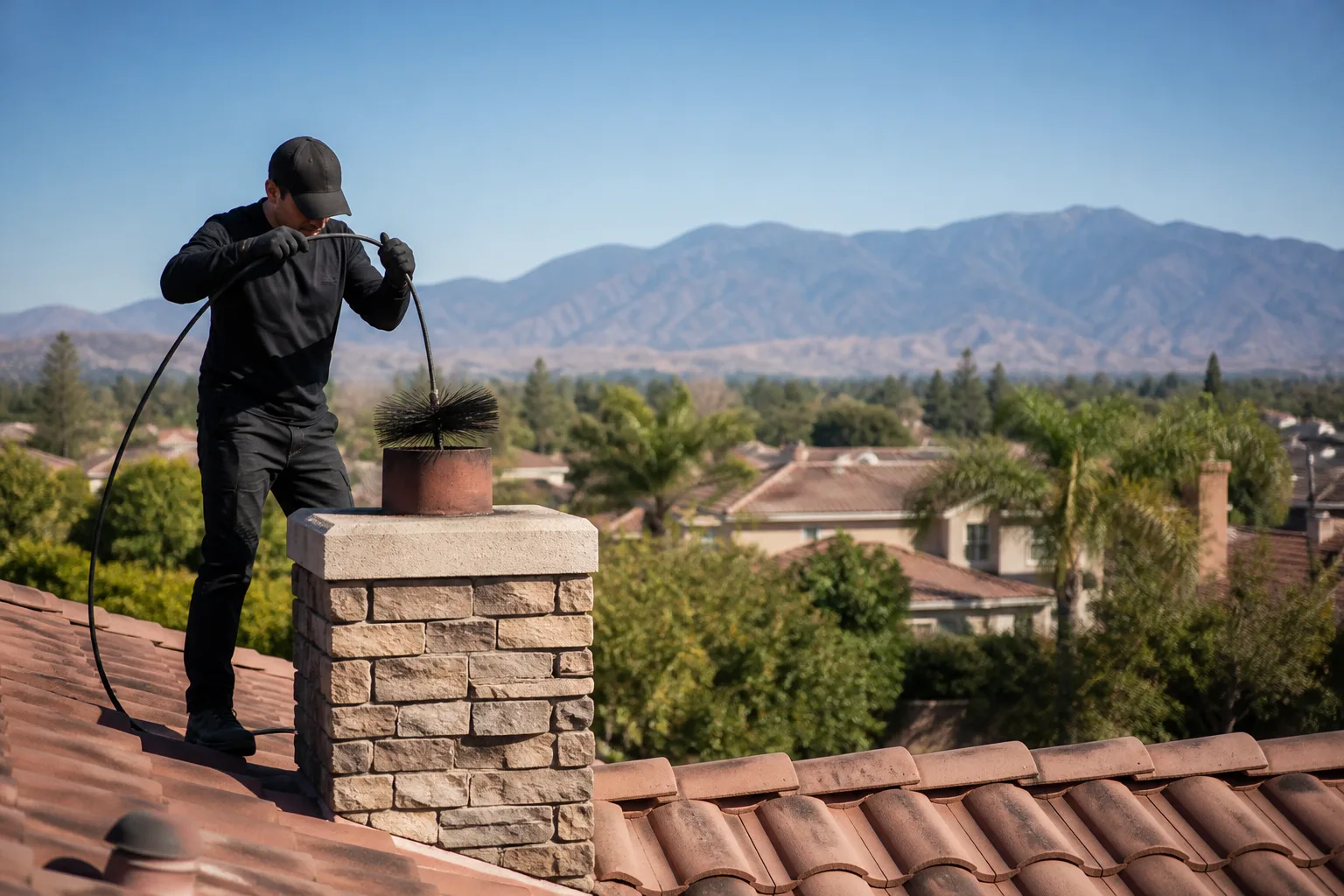
A chimney sweep removes combustible deposits from the flue surface. Creosote, soot, and the crusty glaze that forms from burning unseasoned wood all accumulate on the liner walls and reduce the flue’s effective diameter while adding fuel for a chimney fire. Cleaning restores the surface. Relining replaces it. These are different jobs addressing different problems, and the key is knowing which condition you’re looking at.
Sweeping is appropriate when the existing liner is structurally intact but dirty. Relining becomes necessary when the liner has failed, or when the flue was never properly sized for the appliance now connected to it. Here’s what we look for in Chino homes, where thermal cycling between cold desert nights and hot attic spaces accelerates clay tile deterioration:
| Condition | What it means | Action |
|---|---|---|
| Light creosote buildup (1/8″ or less) | Normal combustion byproduct from wood burning | Routine sweep |
| Glazed or shiny creosote layer | Low-temperature fires, often from unseasoned wood | Deep cleaning, often with rotary tools |
| Spalling clay tiles (flaking or cracked) | Water intrusion plus heat cycling has broken the clay | Relining or HeatShield resurfacing |
| Gaps between clay tile sections | Mortar has failed, flue gases can escape into the chase | Relining required |
| Oversize flue relative to appliance | Draft is too weak, causing smoke rollout and condensation | DuraFlex liner sized correctly |
In Chino, the oversize flue problem is more common than most homeowners expect. Older masonry chimneys were often built large enough for a wide-open wood-burning fireplace, then later retrofitted with a gas insert or smaller wood stove. The result is a flue that doesn’t maintain enough velocity to carry combustion gases out and instead lets them cool, condense, and pool inside the chimney. A correctly sized DuraFlex liner restores the draft physics to match the appliance actually installed.
The Sequence: How a DuraFlex Relining Works Alongside a Sweep
Relining isn’t an alternative to sweeping. It’s the next step after sweeping reveals the problem. Here’s the order in which a proper job proceeds, and any contractor in Chino who skips steps is guessing at a solution you’re paying to have engineered correctly.
- Pre-cleaning sweep: Remove accumulated creosote and soot so the underlying flue surface can actually be seen.
- Video inspection: A camera scan of the full flue length documents tile condition, mortar joints, offsets, and obstructions. You should be able to see the footage yourself.
- Measurement: Liner diameter is calculated from the appliance’s BTU input, fuel type, and flue height. This is math, not preference.
- Sizing and specification: The right DuraFlex length and diameter are selected, along with the cap, top plate, and connectors rated for your appliance type.
- Installation: The liner is fed down the existing flue, connected at the top and bottom, and terminated with a rain cap and storm collar that work together as a system.
- Post-installation verification: A final draft test and inspection confirm the system performs before you light the first fire.
One thing to note about Chino weather specifically: our summers hit 100 degrees routinely, and the chimney is one of the most exposed parts of the house. The top plate, storm collar, and cap assembled with the DuraFlex liner need to withstand that thermal expansion and the occasional Santa Ana dust storm. This is why we specify Copperfield fittings at the termination point. The Copperfield cap and top plate system pairs with DuraFlex’s corrugated profile to create a mechanical seal that doesn’t rely on silicone caulk beads that bake and crack after two Chino summers.
Why the Fittings Matter as Much as the Liner
A liner is only as good as the termination system that keeps water out and draft flowing. Cheap caps with stamped metal flanges and sloppy silicone work are the most common failure point we see when inspecting Chino chimneys that were relined by someone else. The liner itself is usually fine. The top cap has rusted through, or the storm collar has slid, or the top plate no longer sits flush against the crown.
Copperfield and Olympia Chimney manufacture termination components built to the same professional specification level as DuraFlex liners. The top plate is the critical interface: it must span the flue opening, support the weight of the liner hanging below, and accept the cap without allowing water to track down between the plate and the masonry crown. When the crown itself is cracked or poorly sloped, the best top plate in the world won’t compensate. That’s where a proper crown repair or sealant from the Olympia Chimney product line comes in before the liner installation proceeds.
Famco dampers are another component specified by name in Chino jobs where the existing throat damper has seized or warped. A DuraFlex liner changes the flue diameter, which changes the draft characteristics, which means the damper that worked adequately before may no longer give you the right closure and adjustment. Installing a new Famco damper rated for the new liner diameter completes the system. The goal is a chimney that drafts correctly, closes tightly when not in use, and doesn’t leak heat or smoke at any point in the cycle.
How to Verify You’re Getting Genuine DuraFlex, Not an Offshore Equivalent
Offshore unbranded liners have flooded the masonry supply market over the last decade, and some of them look nearly identical to DuraFlex when boxed. The difference shows up in alloy composition, weld quality, and certification documentation. Here’s what we tell Chino homeowners to ask, because the questions themselves will tell you a lot about the contractor:
- Ask for the UL 1777 certification. Genuine DuraFlex carries this listing, and the contractor should be able to provide the listing number and the installation manual that corresponds to it. If the answer is vague, walk.
- Ask what alloy the liner is. The answer should be 316Ti for a chimney application. If the bid says “304 stainless” or just “stainless,” that’s a different product grade. 304 lacks the titanium stabilization and is more vulnerable to the high-temperature corrosion cycle in wood and gas flues.
- Ask to see the liner before installation. DuraFlex is shipped in labeled cartons with manufacturer markings. A contractor should have no problem showing you the box. Offshore product often arrives in unmarked sleeves.
- Ask for a warranty worksheet. DuraFlex’s manufacturer warranty documentation includes the liner model, diameter, and installation date. If your contractor can’t produce this, you have no warranty path even if the product is genuine.
- Ask about the termination components. A contractor paying for genuine DuraFlex will almost certainly pair it with name-brand caps and plates from Copperfield or Olympia Chimney. Unbranded offshore caps are usually the tell on a cheap patch job.
We pulled a liner out of a house off Monte Vista Avenue last fall where the previous contractor had installed a 304-grade unbranded liner with a sheet-metal cap held on by two Tek screws. The homeowner had paid for a relining job three years before and already had flue gas staining on the ceiling of the chase. The liner had perforated from acidic condensate. Replacing it with a properly sized DuraFlex system cost less than what she’d already spent, because the original job had to be torn out completely.
When to Call a Professional Instead of Figuring It Out Yourself
If you’re reading this and trying to decide between a sweep and a reline without putting eyes on the flue, stop here. A video inspection costs a fraction of even the cheapest liner job, and it gives you concrete evidence of what’s happening inside your chimney. You’re not making a guess; you’re getting a diagnostic. That’s the difference between selling yourself a reline you didn’t need and missing one that keeps you in fire-safety limbo.
This is also where Chimney Sweep Chino home operates a little differently than a cleaning-only operation. We don’t have a sales incentive to upsell you into a liner. If the camera shows clean clay tile and intact mortar joints, we’ll tell you to sweep it and go enjoy your fireplace. If it shows spalling or mortar failure, we’ll show you the footage and explain the options, including HeatShield resurfacing as a mid-cost alternative when a full liner isn’t warranted yet.
Related services in Chino: Chimney Sweep in Chino covers our standard cleaning and inspection process, and Chimney Repair in Chino goes deeper on HeatShield and masonry restoration options if you need the full scope.
The Bottom Line
DuraFlex is the product we recommend when a Chino chimney has failed or never matched its appliance, and it’s not a product to buy on price alone. The liner’s 316Ti alloy, UL 1777 listing, and precise sizing from a real video inspection are what separate a long-term fix from a repeat problem. A sweep tells you what’s on the surface. A camera tells you what the surface is doing. And the right answer, whether that’s a cleaning, a HeatShield treatment, or a full DuraFlex reline, comes from evidence, not a sales script.
If you’re in Chino and need help assessing your chimney, our dryer vent cleaning service in Chino often runs alongside chimney inspections since both vents share the same fire-safety principle: obstructed airflow is the hazard. Call (866) 321-6641 for a free estimate. We’ll tell you what your chimney actually needs, even if the answer is a $200 sweep and nothing more.
Frequently Asked Questions
A DuraFlex liner installation in Chino typically runs $1,800 to $3,800 depending on flue height, diameter, termination components, and whether scaffolding or roof access complications apply. A simple single-story flue with standard Copperfield cap and top plate lands at the lower end; a two-story chimney with an offset flue and a crown repair requirement pushes higher. Call (866) 321-6641 for an exact quote. Estimates are free, and the video inspection that determines whether you even need a liner is included in a standard sweep visit.
Only if the inspection shows the existing liner is structurally intact. Creosote and soot can be removed with a sweep, but cracked clay tile, failed mortar joints, or an oversize flue cannot be fixed by cleaning. A camera inspection tells you which condition you have. In Chino, we see enough failed clay liners in 30-plus-year-old homes that we won’t recommend continued use without knowing what the flue looks like first.
A properly sized and installed DuraFlex 316Ti liner in a residential chimney typically lasts 15 to 25 years or more, depending on fuel type, burn frequency, and maintenance. Gas appliances produce acidic condensate that tests the liner’s corrosion resistance over time; wood burning adds thermal cycling stress. Annual inspections catch early wear before it becomes a replacement issue. The warranty documentation you receive at installation is the baseline for the manufacturer’s expected service life.
In most cases, yes, if the existing flue is unlined clay tile or has deteriorated. Modern gas appliances exhaust at lower temperatures than wood fires, which means the flue gas cools faster and condenses more readily inside the chimney. That acidic condensate attacks clay tile and mortar quickly. A correctly sized 316Ti liner resists that chemistry and maintains the draft velocity the appliance was engineered for. Skipping the liner on a gas conversion is how you end up with staining, odor, and eventually flue failure.
Written by the team at Chimney Sweep Chino, serving Chino since 2011.
Need Chimney Cleaning Help?
Call Chimney Sweep Chino - licensed & insured, here with fast help in Chino.
(866) 321-6641